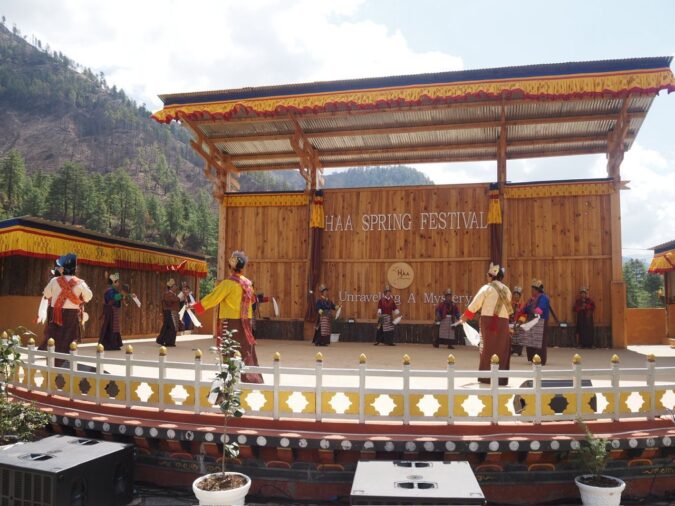
This year’s Haa Spring Festival ended on a high note. Vendors were happy, organisers relieved. But beyond these, the festival left the community with a quiet promise, a glimmer of hope. A few new dancers stepped forward and joined the Chundue Gongzhey troupe. For years, with not many showing interest, elders performing the musical tribute to their guardian deity feared that they might be the last.
The act of carrying forward the rich past begins from a quiet room.
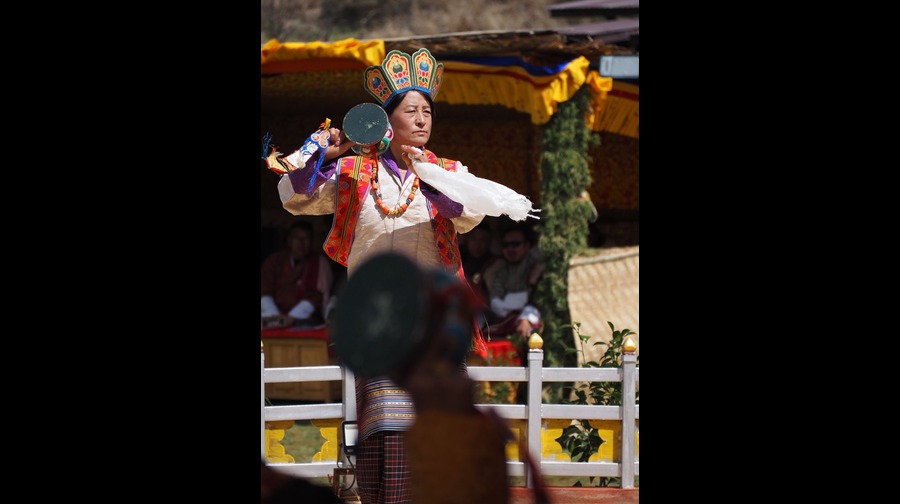
Dema is among the four new Chundue Gongzhey performers. Holding a ritual drum and traditional headgear, ri-nga, she offers a prayer, a conversation between her and the guardian deity of her valley, Ap Chundue. Blessed and protected, Dema starts getting ready with other costumes for Chundue Gongzhey.
Dema is 43 years old. By some measures, a late beginning. But, by the logic of tradition, exactly on time.
“I wanted to participate before but never got the chance. This is our tradition and culture; there is nothing to be ashamed of. It is our responsibility to preserve it, and that is why I stepped forward to learn Chundue Gongzhey.”
Other new comers echo Dema’s conviction. For them, atradition that has endured generations survives not merely through mandates and institutions alone, but through the simple and personal choice to carry it forward.
Dechen who is also from Lhayuekha said “I believe the knowledge we gain through participation will benefit our children in the future. More importantly, I was genuinely interested in learning and becoming part of this age-old tradition.”
Chundue Gongzhey is one of Haa’s oldest traditional songs, sung in praise of Ap Chundue. Historically known as Jumbi Pawo, it originated in Tibet. It was later introduced in Bhutan during the era of Dasho Sonam Tobgay Dorji. Oral history suggests that Chundue Gongzhey has been around for about 150 years.
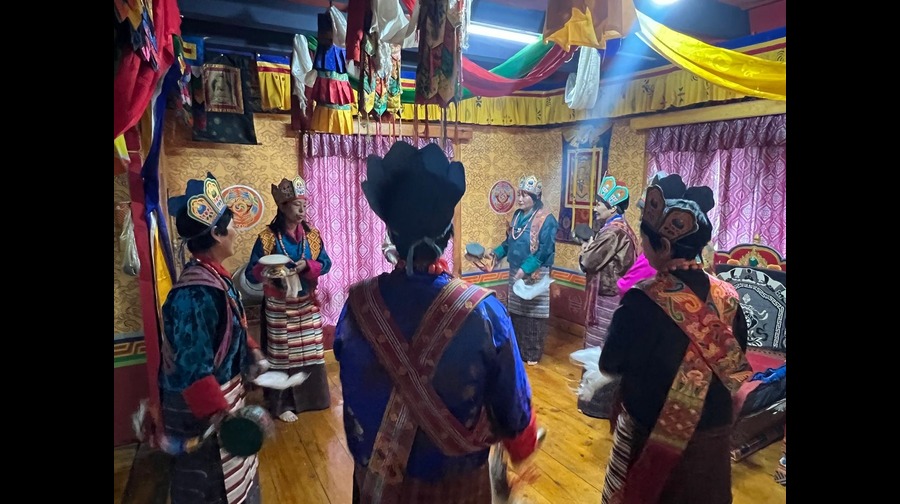
The district and gewog administrations have been supporting its preservation by providing costumes and encouraging its performance during special occasions.
Kelzang Jamtsho, the district cultural officer said, “As the elderly grow older and fewer young people take interest, there is a real risk of the tradition fading away. Anticipating this, we have taken steps to document the dance visually to preserve it for the future.”
Tenzin Jamba, Chairperson of Dzongkhag Tshogdu said, “We are encouraging those interested to participate. If not, we will teach our district dancers.”
Despite such supports, elderly people of Haa have long been worried about preserving the tradition. For all its richness, Chundue Gongzhey, faces a quieter threat than time and support. It is the misconceptions that have gradually taken over the younger generations.
Zam said, “Some young people criticise us and compare our dance to a Shaman. They feel embarrassed to participated.”
“If we perform well, they are happy. Otherwise, they call the dance an elderly dance or a bjibi paow. But that’s not correct. It’s different from bjibi paow,” said Zam.
According to the elderly participants, although challenging, they continue to encourage the younger generation to learn the tradition. Chungdue Gongzhey, as they believe, serves as a bridge between Haa’s local beliefs and cultural expression.
Zam added that “I encourage my friends and younger ones to join the group. When performed by younger people, the energy feels different, it adds a new charm to the dance. It also gives us the chance to travel and showcase our tradition in different places.”
“We support the new dancers by helping them look for costumes and ritual instruments,” said Zam.
“If we rely on just one lead singer, there’s a risk the lyrics could be lost or altered over time. So I plan to learn them properly and pass them on to the younger generation,” said Dema.
For now, the four new members have provided a relief. But for Chungdue Gongzhey to flourish, four can never be enough. It will take a community, of all generations, that actively nurtures what it claims to treasure.
As a song that travelled across valleys and time, Chungdue Gongzhey is never meant to live in a museum,but among the people – alive, vibrant and unbroken.
Sonam Wangdi