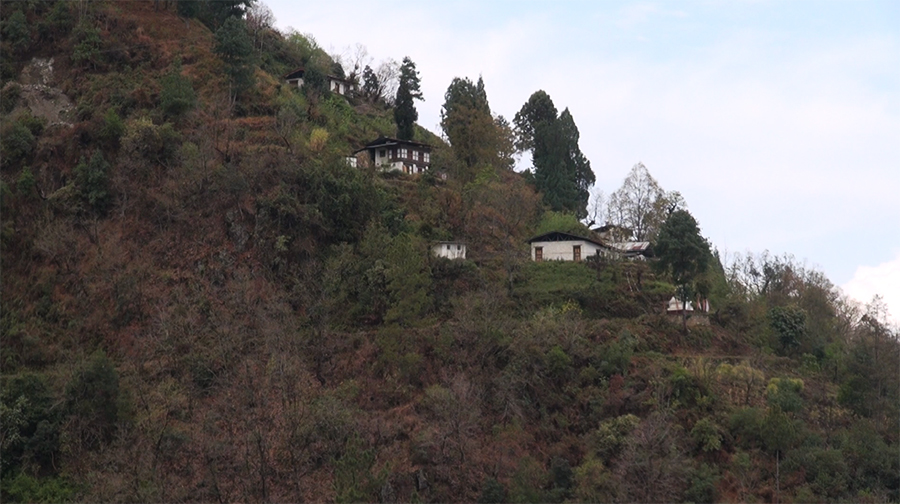
 Access to early education remains a challenge in parts of Trashi Yangtse. In Yalang Gewog’s Dhugti Village, one facilitator is helping bridge that gap on foot. For nearly three years, an ECCD facilitator has been walking about three hours to provide home-based learning to children who cannot reach a classroom.
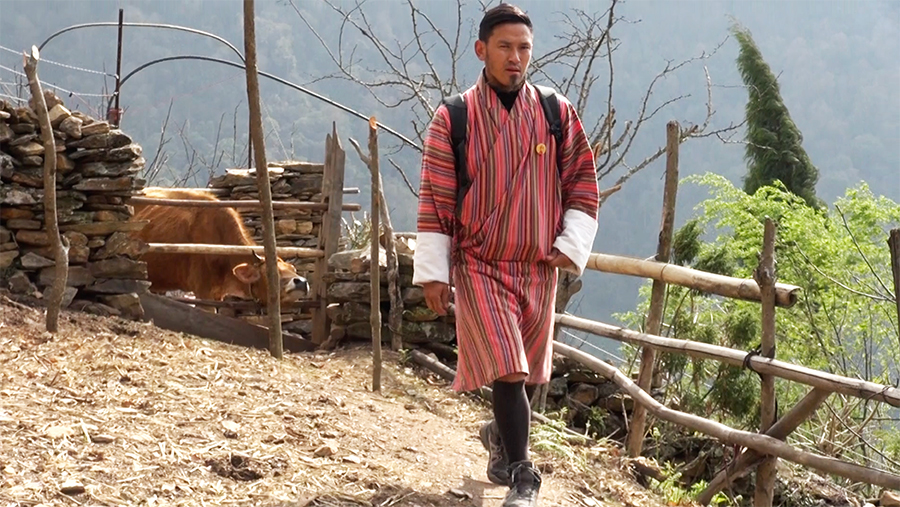 35-year-old Dawa Tshering from Toedtsho Gewog in Trashi Yangste starts his journey early in the morning.
He walks through forest trails, crossing narrow paths and bridges, carrying learning materials on his back.
For him, this is not a one-time effort. It is a routine that repeats twice every month. He serves at the Melongkhar ECCD Centre in Yalang Gewog. But his classroom often lies deep in remote villages like Dhugti.
He joined as an ECCD facilitator in 2023, after serving more than six years as a non-formal education instructor.
For nearly three years now, his work has extended far beyond the classroom.
After nearly three hours of walking, he reaches Dhugti Village, a remote village sharing a border with Tawang in India.
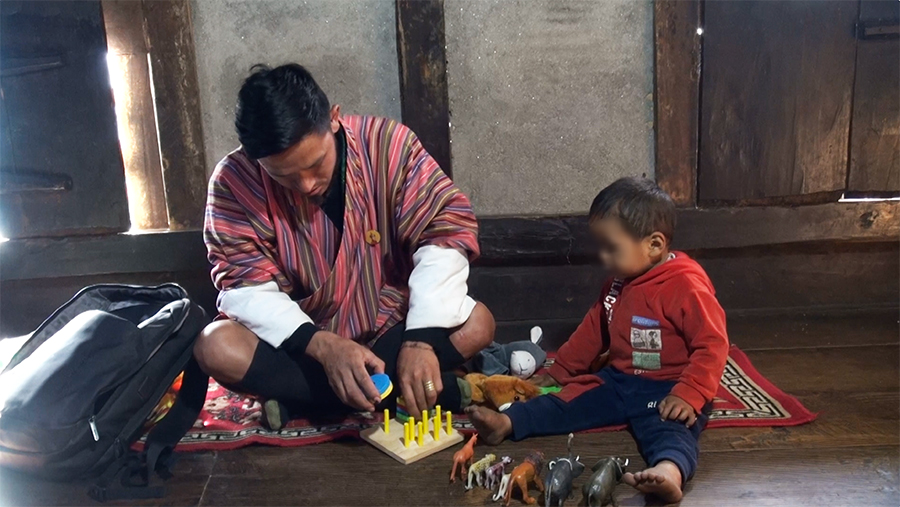 The moment he arrives, the wait is over for two young children. Their classroom begins right there, in their home.
With simple teaching materials, Dawa guides them through colours, names of animals and basic learning activities. For children who cannot travel to the ECCD centres, these sessions have become their only learning opportunity.
“It is quite difficult because the village is far. I have to walk three to four hours to reach here. In good weather, it is manageable, but during the monsoon, it becomes risky as I have to pass through forest areas. At times, trees, branches and even boulders fall along the way. Still, when I think about the children, the challenges feel small.”
For families in the village, the service is making a difference.
“We don’t have road access here, so we cannot take our children to the ECCD centre. During the monsoon, it is risky to travel because of falling boulders and tree branches. However, ever since the ECCD facilitator started visiting, my child has learned to name colours and the animals,” said Chimi Youden, Parent, Dhugti, Yalang Gewog, Tashi Yangtse.
“Earlier, their older siblings used to teach the younger ones, but they have all moved away, and there was no one left to guide them. But now, the ECCD facilitator comes to teach our child. It has really helped. He brings learning materials and our child can now identify animals in both Dzongkha and English,” said Pema Wangchuk, Parent, Dhugti, Yalang Gewog, Tashi Yangtse.
Some children from the village have now enrolled in Dhugti Primary School, helping ease the transition to formal education.
As the session ends, the children wave him goodbye. Dawa Tshering begins the long walk back through the same forest trail he came from.
In Dhugti Village, education does not begin with a school bell. It begins with a three-hour walk through the forest. And for one facilitator, it continues with every step he takes to bring learning closer to children.
Sonam Darjay in Tashi Yangtse
Edited by Sonam Pem