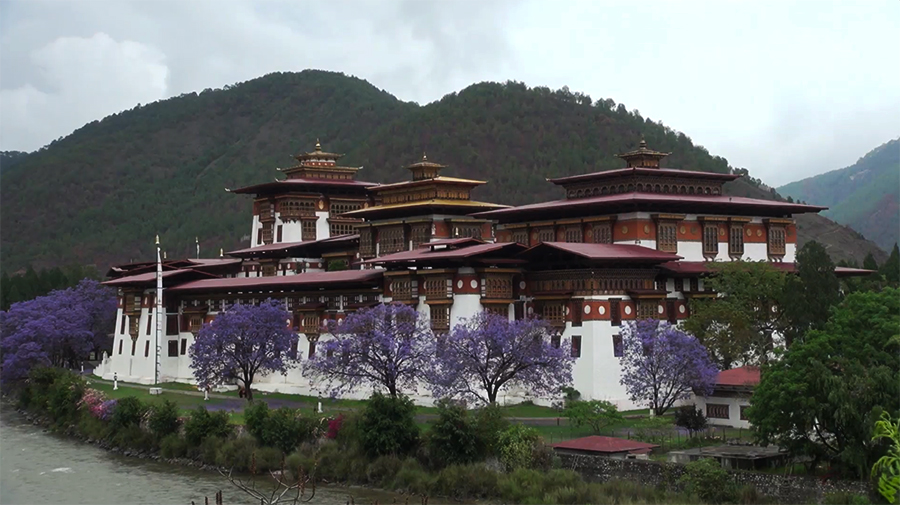
 Filmmakers in the country have been expressing concerns over restrictions on filming in temples, dzongs, and other religious sites. They say that while regulations governing filming around heritage sites have existed for decades, the approval process has become stricter in recent years. They fear that if such restrictions continue without alternatives, it could discourage the production of films that showcase Bhutan’s rich culture and heritage, and potentially slow the growth of the country’s film industry.
Members of the film industry say that while they understand the need to protect sacred sites, tighter restrictions in recent years have made it increasingly difficult to authentically portray Bhutanese culture on screen.
They say many Bhutanese films rely on real temples, dzongs and traditional settings to tell stories rooted in the country’s spiritual and cultural traditions.
Filmmakers say cinema can serve as a powerful cultural promotion tool, often reaching audiences that traditional tourism campaigns may not.
Actor Nidup Dorji said, “We are allowed to take videos within 200 metres of the location, but we can’t capture anything. The current approval is as good as not approving because we can’t capture intricate details of that structure. Bhutan is known for its rich culture, but that richness comes from music and films. So, if authorities could do away with restrictions, it could benefit us.”
Filmmaker Sonam Rinchen Kuenfel said, “We won’t even ask to shoot in Thimphu and Punakha dzong. But if everything is put under the restricted list, we can’t really bring good visuals. We can’t really properly portray history. Because our movies are not developed, we don’t have a film city, which is why we can’t really show what we want to.”
Film Director Pema Tshering said, “On one hand, we have to protect our culture and religion, but on the other hand, when we try to make content on culture and religion, we have to face these inconveniences.”
Film Director Rigzang said, “For example, we are told that filming or photographing dzongs and religious sites is not permitted. However, numerous images of these sites are readily available online through websites such as Shutterstock, Getty Images, and Adobe Stock. If films are not allowed to capture such visuals, it raises questions about the images that are widely accessible on the internet. Many of these photographs are believed to have been taken and shared by tourists.”
The Ministry of Home Affairs says the regulation reflects long-standing efforts to protect Bhutan’s cultural and spiritual heritage, noting that temples, dzongs, and other religious sites are living institutions that continue to host daily prayers, rituals, and community gatherings.
“Filming activities involving equipment, lighting, sound systems, or large crews may disrupt religious practices and cause inconvenience for monastic communities. Many such sites also house fragile relics, murals, statues, and manuscripts that are highly sensitive to light, heat, vibration, and handling. Further, visual exposure during filming may unintentionally heighten the risk of illicit trafficking by revealing the location or vulnerabilities of cultural objects,” said Karma Dorji, the chief of the Department of Law and Order.
The ministry says it is exploring plans to establish a dedicated film city with replica cultural sets to enable filming in a controlled environment without affecting authentic heritage sites, though no formal proposal has yet been submitted.
Karma Dorji said, “Applications are assessed case by case in consultation with relevant monastic authorities. Proposals that demonstrate cultural sensitivity, minimal disruption, and a clear educational or heritage purpose may be facilitated under appropriate conditions. It must also be noted here that filming is allowed on a private Lhakhang with prior permission from the owner.”
The Department of Culture and Dzongkha Development is currently reviewing the matter and exploring the possibility of identifying a temple in each district where filming may be permitted under standard operating procedures while upholding the sanctity, integrity, and authenticity of the sacred cultural sites.
However, members of the film industry say that limiting filming to just one designated temple in each district may not be practical for storytelling. They argue that Bhutan has produced hundreds of films over the years, and relying on a single setting could reduce the visual authenticity and diversity that Bhutanese films require to portray the country’s rich cultural landscapes.
Pema Tshewang & Samten Dolkar