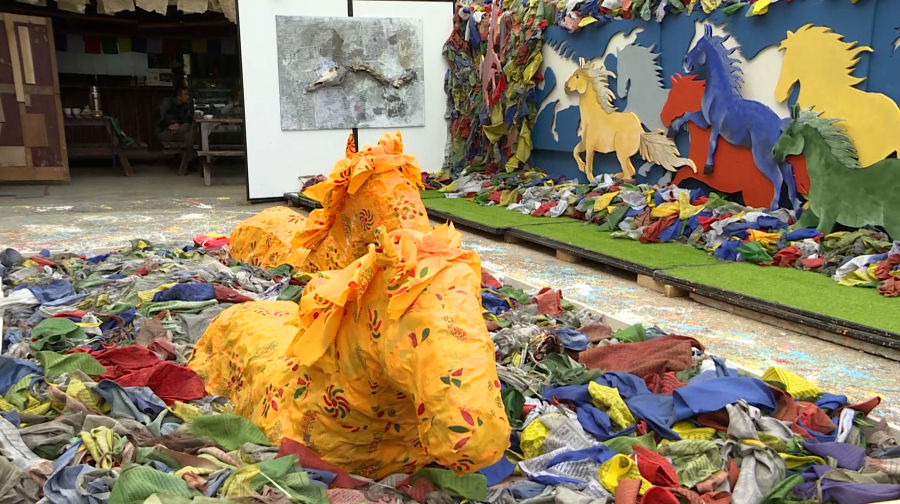
 Where do Lungta prayer flags that carry aspirations and prayers go after they are worn out? And are people aware of what most of these flags are made of? These sacred symbols often outlive their purpose, fading across hills and forests, largely ignored once they deteriorate. To inspire reflection and action, VAST Bhutan is organising the Lungta Art Festival to raise awareness on the proper use of Lungta prayer flags and highlight their environmental impact, encouraging more mindful and sustainable practices.
Lungta prayer flags hold deep religious and cultural meaning. Hoisting them is believed to carry prayers, blessings, and aspirations through the wind, spreading goodwill and positive energy.
However, officials pointed out that once the Lungta prayer flags serve their purpose, they often remain scattered across hillsides and forests.
Officials said that old and torn flags, made from synthetic materials, do not decompose easily and contribute to environmental pollution.
“Most prayer flags are made of polyester, wool, or nylon, which can harm the environment. We may not realise this when we buy them, but the impact becomes clear when we see them hoisted across hills and forests,” said Karma Wangdi, Founder, VAST Bhutan.
Therefore, through the Lungta Art Festival, VAST Bhutan aims to promote greater responsibility among the public. 60 artists have put up over 140 artworks to educate the public on the spiritual significance of prayer flags through art, while also highlighting the environmental impact caused by their improper disposal.
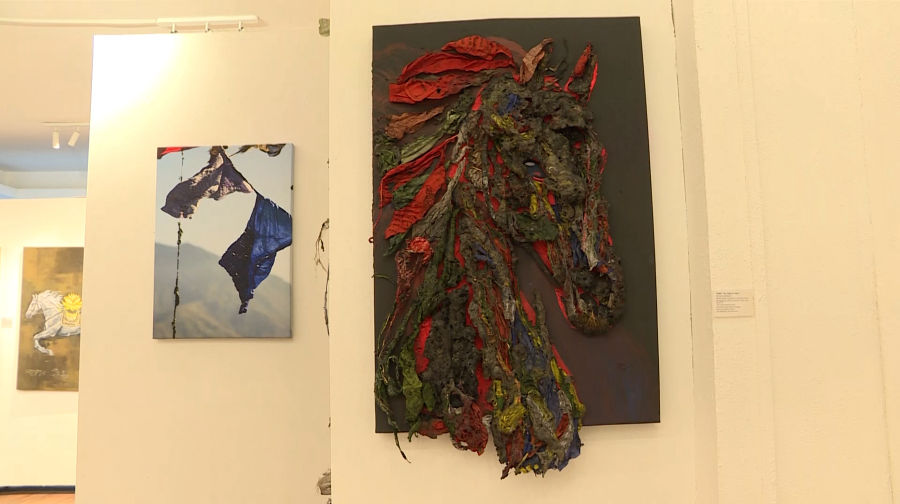
As part of the year-long festival, VAST Bhutan will conduct discussions and workshops to explore the design, development, and production of biodegradable Lungta prayer flags. The organisation will engage the public and promote the use of environmentally friendly materials.
“We want to raise awareness about the proper way to hoist prayer flags and explore ways to make them environmentally friendly. Through the festival, we hope visitors will see and understand that many of these flags are made of plastic and the impact this has on the environment,” added Karma Wangdi, VAST Bhutan’s Founder.
Organisers hope the festival will encourage people to reflect on the balance between faith and environmental responsibility. By combining art, culture, and advocacy, the initiative aspires to inspire mindful practices that honour tradition while protecting the country’s environment.
Sangay Chozom
Edited by Phub Gyem