
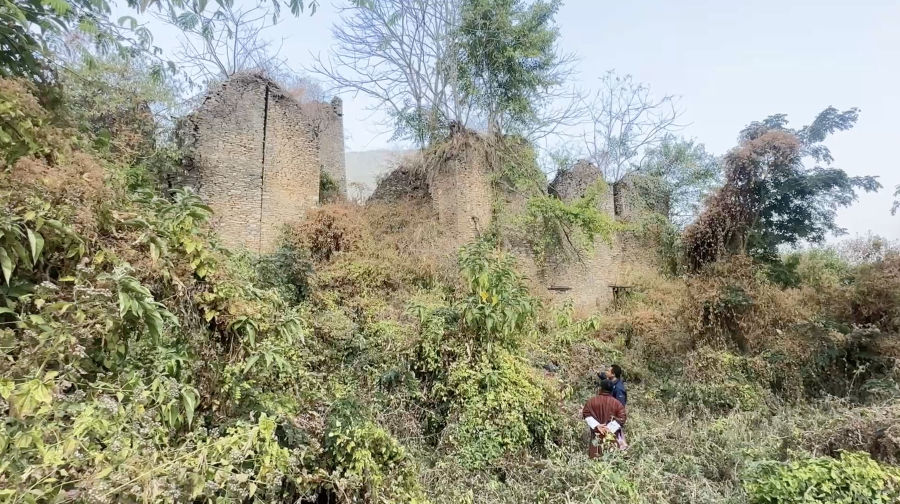
 Perched in the hills of Saling Gewog in Monggar, Zhonggar Dzong, a 17th-century fortress now reduced to haunting ruins, stands as both an architectural marvel and a site steeped in legend. Today, with dense vegetation almost erasing its intricate masonry and historic legacy, residents are calling for urgent preservation efforts, hoping restoration could transform the forsaken fortress into a major tourist attraction.
Rising beside the central pinnacle, or utse, the watchtower remains one of the tallest surviving structures of Zhonggar Dzong. Today, the once-bustling pathways leading to it lie buried beneath a dense blanket of vegetation.
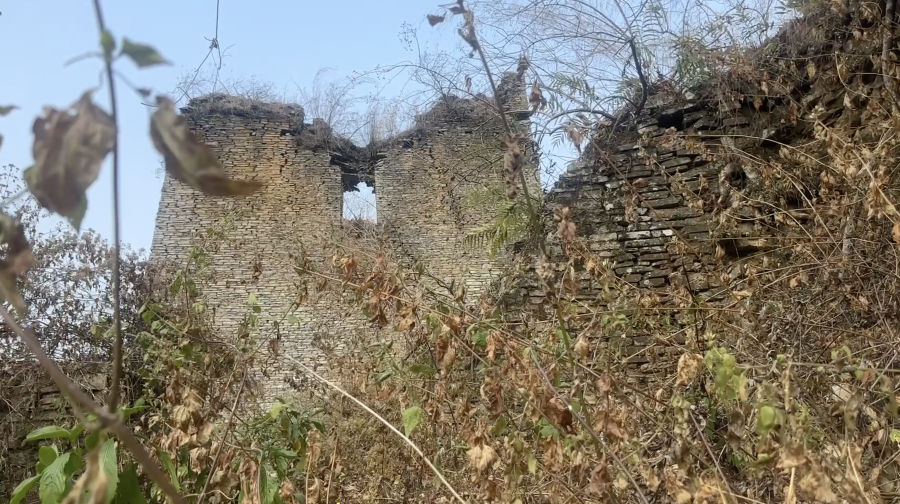
To reach the main entrance of the dzong, visitors have to clear layers of overgrowth.
“From what we heard from our grandparents, everybody travelling between eastern and western Bhutan used to pass through this point, because there was no other route. Sometimes the dzongpon would come to observe travellers passing through, sitting in that upstairs chamber,” said Sonam Wangchuk, Sengor Tshogpa, Monggar.
Although no written records confirm its exact origins, oral traditions suggest that the dzong was constructed in the 1,400s, while other accounts place its construction around 1,700. Regardless of when it was built, this medieval fortress has remained completely abandoned for centuries.
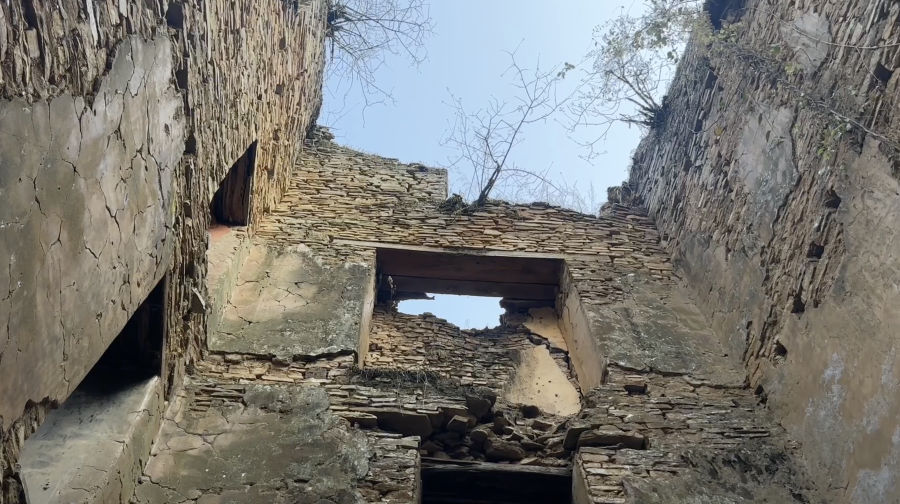
Despite years of neglect, much of its masonry still stands firm and intact. The structure spans more than five acres and even includes an archery range within its walls.
The dzong suffered a major fire incident, followed by a massive earthquake, leading to its downfall.
Despite repeated discussions at both the gewog and dzongkhag tsogdu levels, it remained resolved and the matter kept getting deferred to future sessions.
“Not long ago, we received a budget to maintain the dzong, and we carried out the necessary works accordingly. Yet today, as we returned to the site, shrubs and bushes cover everything again. We are unable to do anything due to the lack of funding. The matter has been presented at several dzongkhag tsogdu meetings, but we failed to secure the budget,” said Tshering Norbu, Saling Mangmi, Monggar.
Locals believe that restoration or proper management of the premises could attract tourists and visitors.
“A couple of years ago, an eco-trail was developed along the ancient route from Sengor to Lingmithang. I personally trekked this trail with tourists. When we reach this point, near the dzong, the tourists always insist on visiting the ruins, but the path is totally impassable. We request that even if it cannot be restored to its formal glory, it would help to have the bushes cleared and the footpaths made accessible,” said Sonam Wangchuk, Sengor Tshogpa, Monggar.
“It has been nearly seven years since I settled here, very close to the ruins. I had the opportunity to guide tourists and share with them the history I know about the dzong. I had led about four groups of visitors to the site. But now, nettle plants, sharp thorny bushes, and thick vegetation have consumed the entire path; it is impossible to pass through,” said Jigme Singye, Resident, Saling Gewog, Monggar.
With the government’s push to promote tourism in the eastern region, cultural sites such as the ruins of Zhonggar Dzong, embodying centuries of history, heritage, and legend, could provide the momentum needed to transform the area into a tourist destination.
Namgay Wangchuck, Monggar
Edited by Phub Gyem