
 Bhutan has taken a major step toward modernising its border control system. The Department of Immigration today launched an Automated Immigration Clearance System at Paro International Airport. Built for Nu 60 M, the system introduces 12 electronic gates to speed up passenger processing. Although initially scheduled for completion in one year, the project was completed in just seven months.
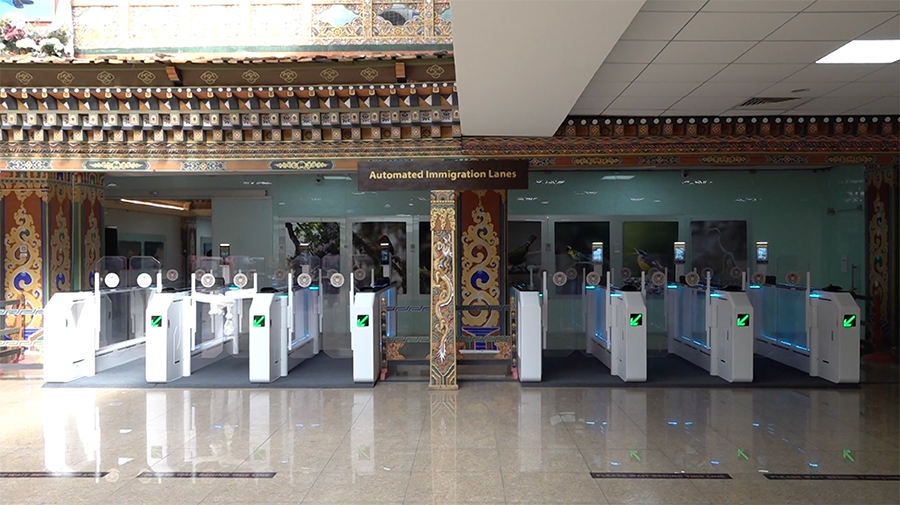 Passengers at the Paro International Airport will now experience a faster and more streamlined immigration process.
The new system uses biometric verification and passport scanning technology to authenticate passengers’ identities and travel documents. The process involves scanning the passport, verifying biometrics, and clearing the traveller within seconds.
Six e-gates have been installed in the arrival terminal and six in the departure terminal.
According to the Department of Immigration, automation is expected to reduce waiting times by nearly 75 per cent, while improving the accuracy and reliability of immigration records.
Biometric verification is also expected to deter fraudulent travel documents and reduce identity fraud risks.
 Home Minister Tshering said, “One of the key advantages of the e-gates is time efficiency. Previously, immigration clearance for arriving or departing passengers took three to five minutes. With the introduction of the e-gates, the estimated processing time has been reduced to approximately one minute.”
For Bhutanese travellers, eligibility requires being an adult, holding a valid Bhutanese passport, and having recent biometrics enrolled with the Department of Civil Registration and Census.
For foreign visitors, once their biometric data is captured upon entry, the system retains the information. This allows faster processing during departure without the need to re-enter details.
The Minister said, “We have now installed e-gates at three locations. Moving forward, we will assess additional points of entry where automated immigration systems are required to further enhance efficiency and passenger flow.”
E-gates are already operational in Phuentsholing, and resources are in place to install similar systems in Gelephu. With the launch of the e-gates, Bhutan takes another confident step toward a faster, smarter, and more secure border system.
Karma Samten Wangda, Paro