
In a small centre in Paro town, recovering addicts are fighting to stay sober, and the facility helping them is fighting to stay open. Jurwa, a drug and alcohol after-care centre, has supported more than 1,500 recovering addicts since 2012. Today, despite its impact, the centre still struggles to survive without funding, formal recognition, or institutional backing.
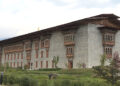
Established in 2012 and made autonomous in 2017, Jurwa was allotted land in town by the Paro district administration and municipal authorities. Since then, it has functioned as a community-based support system for people battling substance and alcohol dependency. It provides counselling, peer support, structured routines and a safe space for recovery.
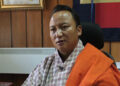
At the heart of the initiative is its founder, Sonam Tshering, a recovering alcohol addict himself. What began as a personal mission to prevent others from falling into the same spiral has grown into a lifeline for more than 1,500 recovering addicts over the years.
Yet despite its impact, Jurwa remains without formal recognition.
“We are actively working in the community and doing our best to support those in recovery. We want to expand and strengthen our services, but we simply do not have the resources. We do not have a patron or strong institutional supporters, only a few individuals who continue to help us out of goodwill,” said Sonam Tshering, Founder, Jurwa, Paro.
The centre has repeatedly attempted to register as a Civil Society Organisation, but financial requirements have proven challenging. Under existing regulations, CSO registration requires an endowment or seed fund of Nu 3 M, a figure far beyond Jurwa’s reach.
“We did everything required to register as a CSO. However, one of the conditions is to maintain an endowment fund of Nu 3 M. Jurwa does not have that kind of support. In fact, we do not even have Nu 20,000 in our account,” said Sonam Tshering, Founder, Jurwa, Paro.
Without official status, the centre struggles to access funding, training opportunities and institutional support. It currently operates without a formal legal identity and is now pursuing registration as a Community-Based Organisation (CBO) in hopes that it will provide legitimacy, exposure and access to capacity-building support.
On the ground, the financial strain is very real.
“Our resources are not enough to provide regular meals. If we manage to arrange lunch, we struggle to provide dinner, and sometimes it is the other way around. There are days when we cook porridge from leftover rice. In such situations, we have no option but to call people we know and request their support,” said Dechen. Wangdi, Counsellor, Jurwa, Paro.
Meals are improvised. Donations are unpredictable. Staff rely largely on goodwill. Yet the doors remain open.
For those seeking recovery, Jurwa offers more than food and shelter; it offers structure, accountability and dignity.
“In the past, I could not stay in one place without turning to drugs or alcohol. Now, I can remain here and stay sober,” said Nishal Mongar, Recovering Addict, Paro.
“I am grateful to Sonam Sir and Dechen Sir. I now follow a proper sleep schedule, and I have not consumed alcohol for 25 days,” said Tenzin Dorji, Recovering Addict, Paro.
“I can guarantee one thing, Jurwa may not take you to heaven, but it will help pull you out of hell,” said Yeshi Jamtsho, Recovering Addict, Paro.
As Jurwa seeks CBO registration to secure legality and support, its future depends on whether the community and institutions recognise the value of what it has quietly built.
Karma Samten Wangda, Paro