
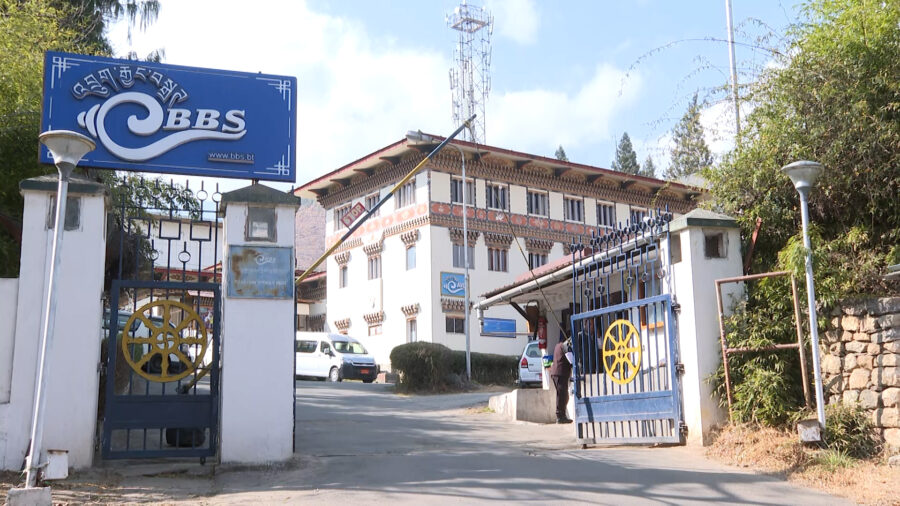
More than a year after announcing plans to introduce private television station, the government says a clear broadcasting policy framework is required before issuing a licence. Alongside, the government says it is also working to transform Bhutan Broadcasting Service into a Public Service Broadcaster. For these plans, works are underway to redraft the National Information and Media Policy.
Preliminary work for private television has already been carried out, including market feasibility studies and industry sustainable assessments, in consultation with the Bhutan InfoComm and Media Authority and the Department of Media, Creative Industry and Intellectual Property.
However, the Ministry of Industry, Commerce and Employment says they cannot yet issue a private television licence, as a comprehensive broadcasting policy is still missing.
Licences can be issued only after a clear and responsible policy framework is in place.
Once finalised, BICMA will oversee the licensing process and draft the necessary rules and regulations.
Meanwhile, reforms are underway to transform BBS from a State-Owned Enterprise into a Public Service Broadcaster as mandated under the Information, Communication and Media Act of Bhutan 2018.
DoMCIIP has asked the company’s management to submit a detailed restructuring proposal as the transition must be carefully planned, financially sustainable and compliant with SOE regulations. They added that simply transforming a name, without governance and management reforms, would not be viable.
To align both initiatives, the government has begun redrafting the National Information and Media Policy, with a focus on broadcasting. A working group led by BICMA and DoMCIIP in coordination with the Office of the Cabinet Affairs and Strategic Coordination, is steering the process.
According to the ministry, if successful, these reforms could reshape the country’s media landscape, expanding viewer choice through private television while strengthening public-interest broadcasting through a renewed BBS.