
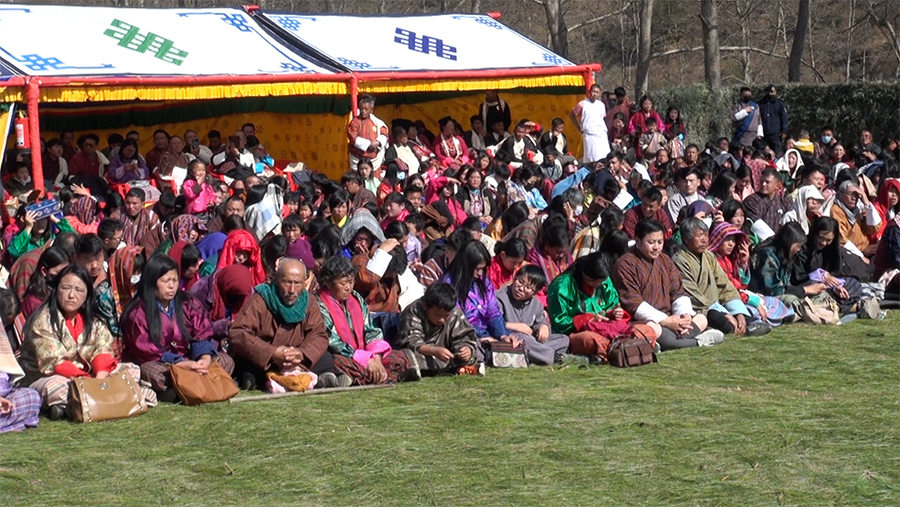
 Thousands of people gathered at Bumdeling Gewog in Trashi Yangtse, to bid farewell to the black-necked cranes. The gewog, home to the country’s second-largest winter roosting site for the birds, hosted a two-day Black-necked Crane Farewell Festival, which ended today.
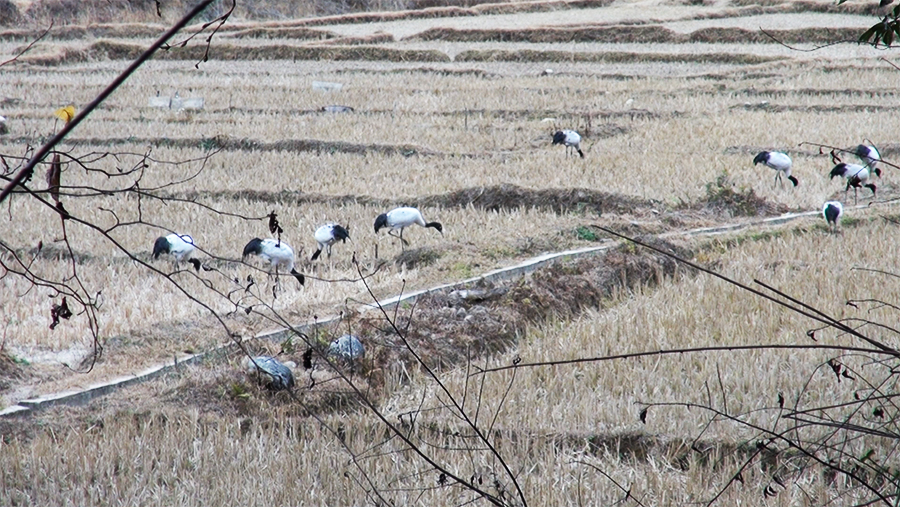 About 50 black-necked cranes are preparing to leave Bumdeling for Tibet, as they do every year by late February or early March. To mark their seasonal migration, the community organised the festival close to the roosting grounds.
Although the cranes rested only a few metres from the festival site, visitors walked towards the fields to watch and bid them farewell. The celebration not only honoured the birds’ departure but also attracted many people who might otherwise never have come to see the cranes.
“I am from Trashi Yangtse, but I never had the chance to see the cranes before. Because of this festival, I could finally see them and learn more, and I am very happy today,” said Mipham Tashi Tshogyel, a student from Trashi Yangtse.
Another student from Trashi Yangtse, Jigme Pelzang said, “I am very happy to see black-necked cranes today. My cousin accompanied me, and my parents and their friends also came to witness the festival and see the cranes.”
Beyond raising awareness about crane conservation, the festival also created business opportunities for local residents, who sold their products to visitors. For many, the cultural performances offered warmth and celebration during the cold winter days.
“People from different places have come here to sell locally-produced goods. As more visitors learn that local products are available, festivals like this benefit our community,” said Tshewang Peldon, a resident of Yangtse Gewog.
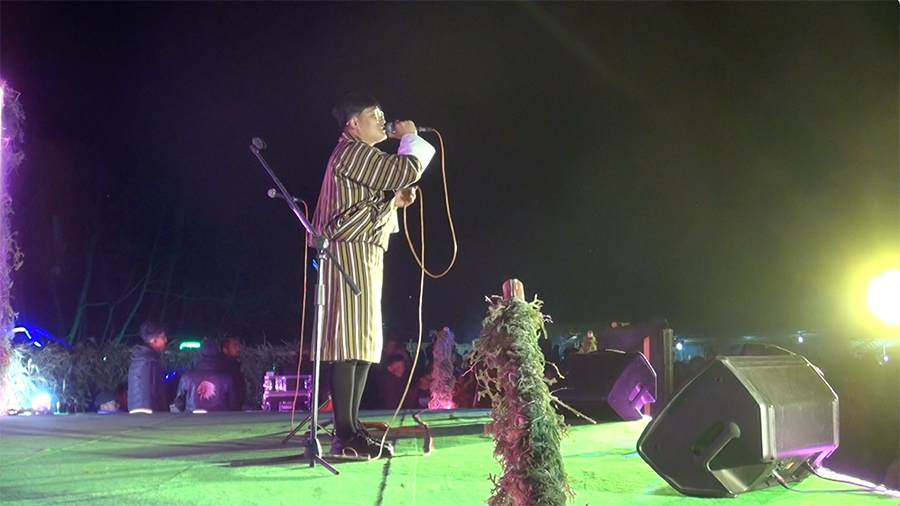 As evening approached, artists entertained the crowds with traditional performances.
Trashi Yangtse District Administration, in collaboration with the Bumdeling Wildlife Sanctuary, the Department of Tourism, and the Department of Media, Creative Industry and Intellectual Property, organised the event with an investment of around seven million ngultrum.
And until the cranes return next winter, the people here hold on to the promise that this ancient bond between nature and community will continue to endure.
Sonam Darjay, Tashi Yangtse.