 As interest in archery grows, crafting traditional archery equipment has become a reliable source of income for many local artisans. In Punakha, rising demand, boosted by social media and a growing number of enthusiasts, is helping craftsmen turn an age-old skill into a sustainable livelihood.
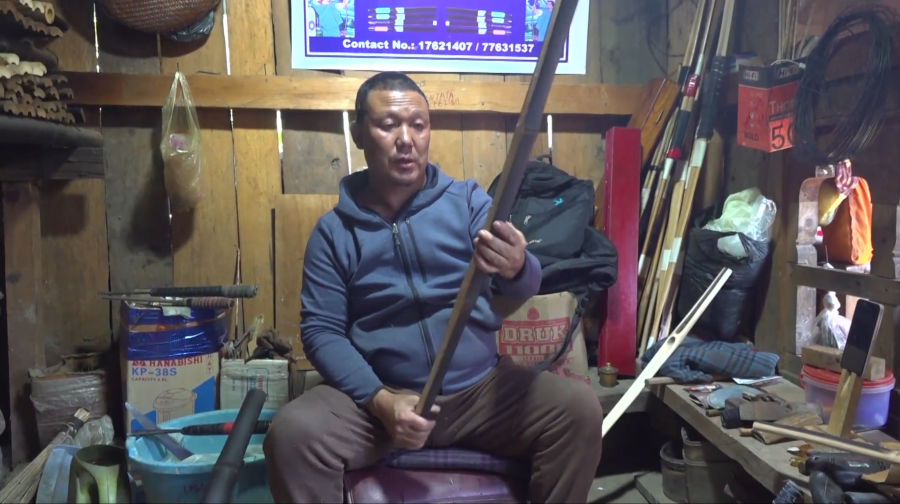
It is the dry season, a time when many people travel on pilgrimage. But for 48-year-old Tenzin from Punakha, it is a season of hard work. Inside his makeshift home workshop, he spends long hours crafting traditional bows, often from eight in the morning until midnight.
Using bamboo sourced from nearby communities, Tenzin carefully dries the material over a fire for several months before shaping each bow by hand. Each completed bow sells for Nu 3,600.
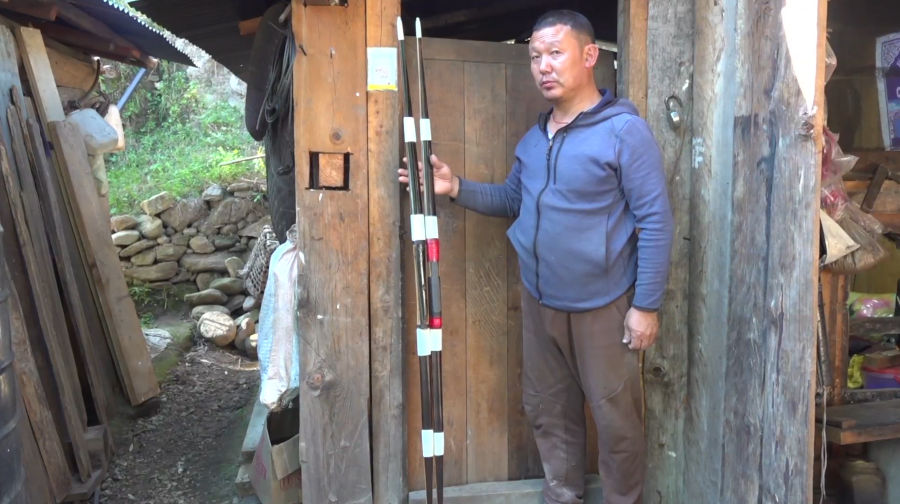 Tenzin has been making bows for decades. Unlike in the past, finding customers is no longer a challenge. Social media has transformed his business. He regularly goes live on TikTok to showcase his work, attracting buyers from across the country.
Demand has grown beyond Bhutan as well. Tenzin is now preparing to dispatch orders overseas. As orders increase, he now spends more time crafting bows than working on his farm. The income supports his family, helping him raise his four children and manage household expenses.
Tenzin said, “When I calculate my earnings for 2023 and 2024, I made around Nu 900,000 from selling bows. Demand continues to grow, with enthusiasts in about 14 districts, including Gasa and Wangdue Phodrang, actively practising traditional archery.”
For now, Tenzin works in the same space where he dries his materials. But he hopes to expand and improve his operation.
He said, “I hope to establish a proper shop and showroom where I can display bows, arrows, and other accessories, including traditional targets. But I don’t have the budget. Any financial support would mean a lot.”
Tenzin is not alone. Several artisans in Punakha and Wangdue Phodrang also make traditional bows and arrows for a living.
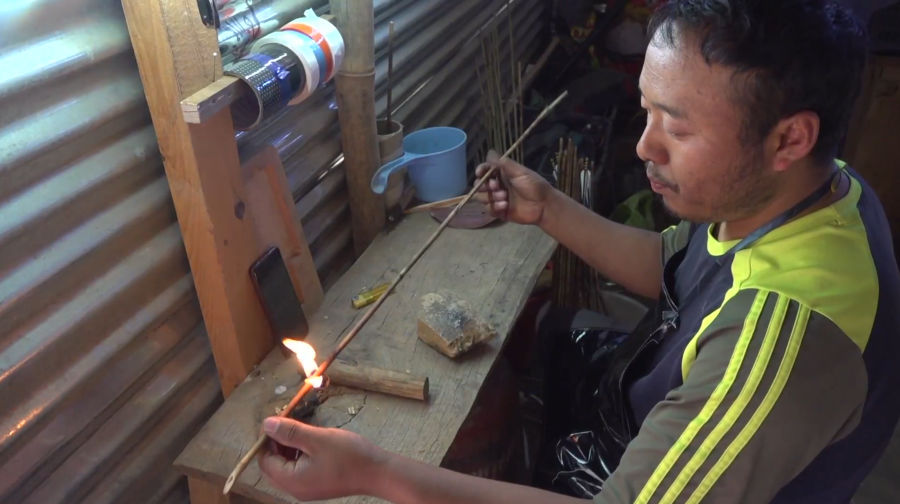 Pema Wangchuk, another traditional arrow maker said, “I am mainly a carpenter, but I also make traditional arrows. Since people like my work, I sell some. I earn around Nu 30,000 a year from arrows, but I cannot focus on it full-time because of my main job.”
As interest in archery continues to grow, the artisans hope that greater support and opportunities will help keep this age-old craft alive for future generations, ensuring that the sound of the bowstring remains part of Bhutan’s living tradition.
Changa Dorji, Punakha
Edited by Kipchu