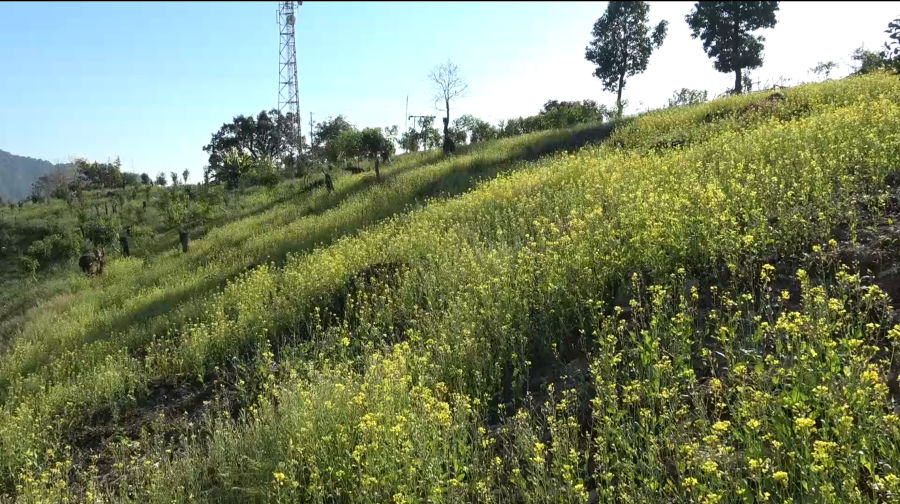
 In an era dominated by imported goods, people of Dechhenling Gewog in Pema Gatshel are turning back to the soil to reclaim self-sufficiency. A crop once central to household cooking oil production—mustard—is now making a meaningful comeback in the gewog.
Mustard was widely cultivated in Dechhenling for decades to extract cooking oil for local consumption. However, with the easy availability and lower prices of imported oil, the traditional practice slowly faded away, leaving the fields fallow.
Determined to revive this lost tradition, more than 50 households have come together to cultivate mustard across nearly 10 acres of land.
The initiative focuses on producing organic mustard oil solely for household use, promoting healthy living, and reducing dependence on imported products.
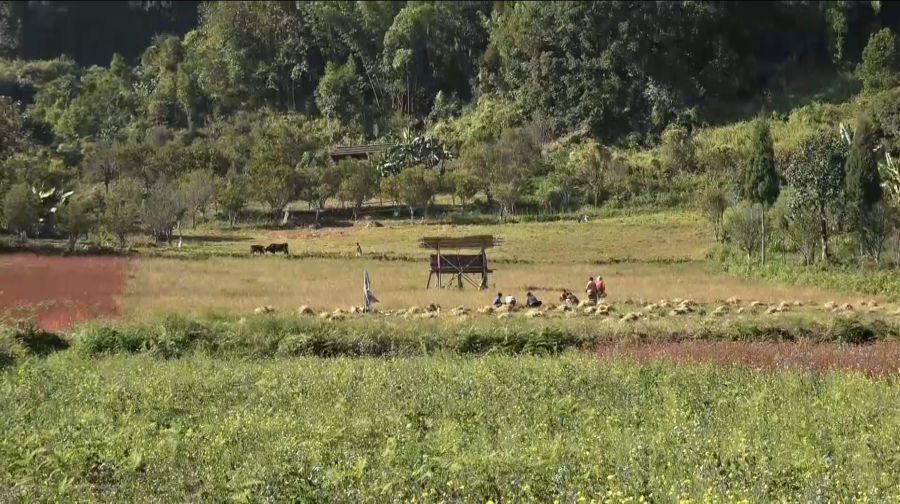
“We thought that it would be better to process by our own like in the past. We can get the imported one easily, but the one that we process by our own will be healthier,” said Sangay Cheki, resident of Shingchongri, Dechhenling Gewog.
“I have cultivated this, thinking I don’t have to buy the oil from the market like in the past. I have started cultivating, since last year, but not as mass as today,” said Rinchen Lhamo, another resident of Shingchongri, Dechhenling Gewog.
Farmers say the revival is also about preserving tradition and making better use of fallow land.
The collective effort has strengthened community bonding, with farmers working side by side from sowing to harvesting. With plans to process the oil locally, residents hope this initiative will serve as an example for other communities.
By reviving mustard cultivation, the people of Dechhenling Gewog are proving that self-reliance begins at home—one field, one harvest, and one drop of oil at a time.
Thinley Dorji, Pema Gatshel
Edited by Yeshi Gyaltshen