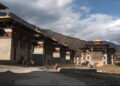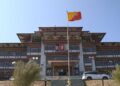
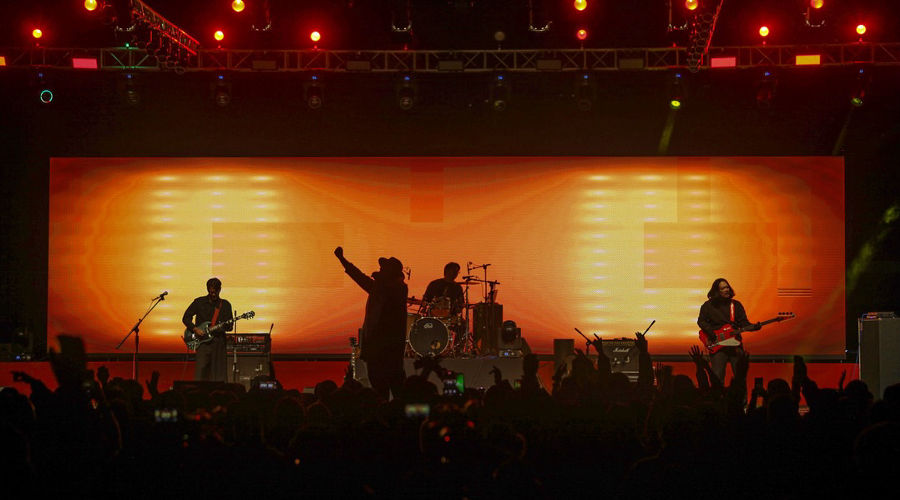
 As prayer flags fluttered in the evening breeze and the sun set behind Paro’s dzong, monasteries and temples, a new sound rose in the valley. Yesterday, electric guitars, drums, and powerful vocals broke the usual calm as Bhutan hosted its first-ever rock festival, a historic first for the town known for its quiet streets and tradition. Six bands performed yesterday, with six more taking the stage tonight.
Known for its monasteries, sacred sites, and a quiet way of life, Paro is not where rock music is expected to take centre stage. But yesterday, amplifiers replaced temple bells, and rock music echoed through the cool mountain air.
The two-day festival brought together local Bhutanese bands and international artists from India, Japan, South Korea, and Thailand, transforming the valley into a space where tradition met modern sound.
For Bhutan’s music community, the event is more than a concert. It is a milestone.
“We feel very proud, and we can learn some new things from them also, like when it comes to sound check, how we have to deal with the lights and stage key. So that is interesting. That helps us to give more information about the music. In our country, people think that rock music is loud. Actually, rock music could be soft rock, like melody, could be there. It doesn’t mean that rock always means loud music,” said Sonam Jigme, Vocalist/Guitarist, Backbeads.
Local bands performed with a mix of pride and nerves as they shared the stage with experienced international musicians. For many, it was their first time playing with advanced sound systems and alongside international bands.
The moment reflected growing confidence in Bhutan’s music scene and a push to create more platforms beyond Thimphu.
“We have learned something very new from the bands from abroad. So, we got a good experience playing along with them, even with the local bands. And for the future of the youths, definitely, there is a lot of scope in music too,” said Gopal Pradhan, Vocalist, The Crossroad.
Bands from India, Japan, South Korea, and Thailand gave the festival an international feel. Each brought a different style, yet all were connected by the raw and emotional sound of rock music.
While some praised the local talents, some drew commonness, turning the festival into a cultural exchange led by music, not words.
“And also in Korea, rock music is not very popular. Like K-pop and idol, those are big things, but rock bands are really a small part of it. So, maybe we have something in common. So we’ll try our best to spread rock music around Bhutan,” said Dyon Joo, Vocalist, Cotoba, South Korea.
“I am really excited to have a show with Bhutan’s local band. I listened to several bands’ soundtracks; their music is so great and a little bit different from Korean bands. I like the Bhutan band’s melody, the guitar melody. It is kind of a very traditional feeling,” said Dafne, Producer, Composer & Guitarist, Cotoba, South Korea.
“Bhutan has unique storytelling. They have a unique culture; maybe from their unique culture, they can just make a great, unique rock band here. I think it is interesting,” said Puttiyos Phalajavin, Vocalist, Poomjit, Thailand.
According to the Department of Media, Creative Industry and Intellectual Property, the idea behind the festival was to make live music more accessible and enjoyable throughout the country.
“Since Paro is also one of the vibrant towns or cities in Bhutan, we have been crowded out with many, not only creative events, but with fairs and other events in the capital. And Paro, we have chosen for a change because even with the creative events, we need to decentralise them, and this Woochu sports arena has the required facilities to absorb thousands of crowds,” said Tempa Tshering, Chief IP Officer, DoMCIIP, MoICE.
As evening fell, the crowd continued to grow, and young fans, long-time rock listeners, curious locals, and visitors were drawn by the excitement of something new. For many, it was their first rock concert in Paro. For others, it was the thrill of watching a new chapter begin.
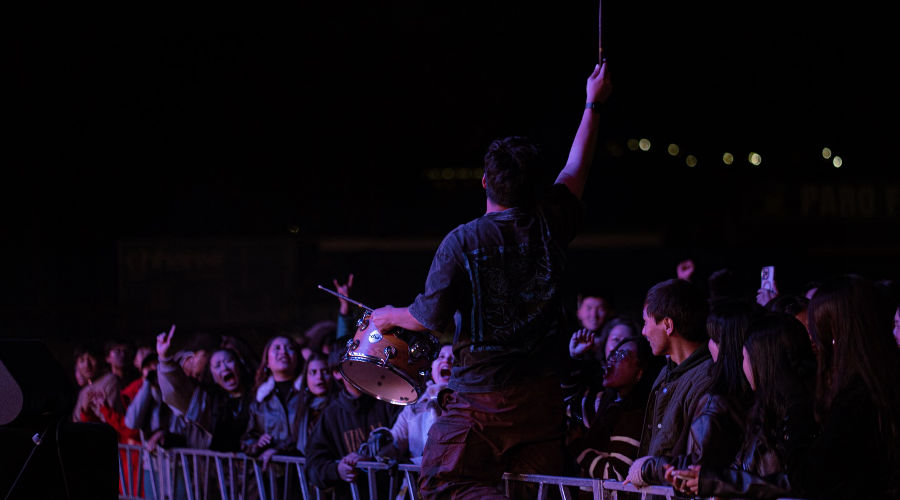
“I have been looking forward to Rockfest in Bhutan. I think it is the first of its kind in Bhutan, so I was so excited to watch. And as an artist myself, I wanted to learn from them, and I wanted to see what is possible. So they are doing a really great job, and I am having a great night,” said Lungten Wangchuk, Audience, Paro.
“Even though I have been to many rock concerts in the US, Korea, and Japan, I see a lot of pure talent here. So I think this Asia Rock Fest in Bhutan is a really good initiative to tell the world more about the talent that you have here. So I’m very happy to be here and be a part of it,” said Derek Kunhee Kim, Audience, Korea.
When the first chord finally rang out, it echoed clearly across the valley. Cheers followed, heads nodded, and for a few hours, Paro gave itself over to loud, electric sound.
By the end of the night, it felt bigger than a rock festival. It felt like history in the making. Old traditions; new sounds. Valleys filled with music. Paro did not just host a concert; it opened a new chapter.
Devika Pradhan & Karma Samten Wangda
Edited by Sonam Pem