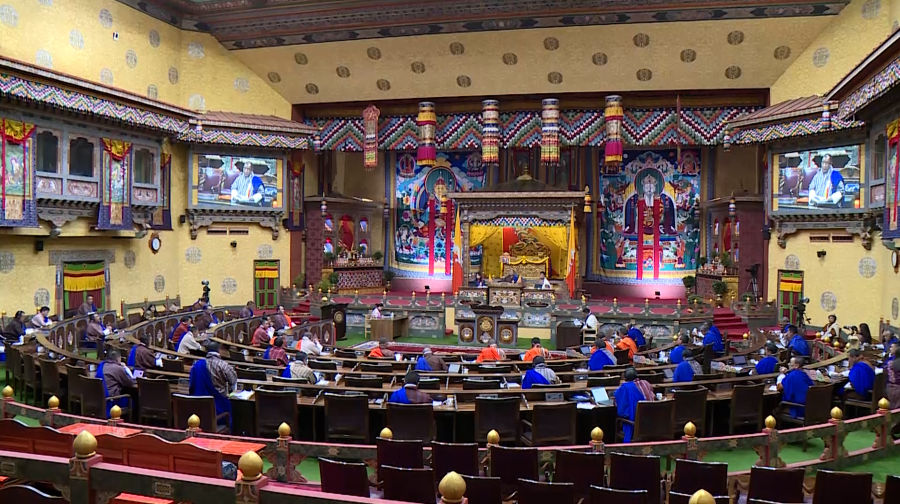
 Some Assembly members raised concerns over the effectiveness of the cost-sharing mechanism. They said it has not adequately benefited economically disadvantaged farmers in remote areas. The first formal model was introduced in 2019, later revised in 2021, and updated this year.
The cost-sharing mechanism aims to help the agriculture ministry increase agricultural production, boost the sector’s contribution to GDP, and raise export earnings. Under the model, the government covers most of the cost of support programmes.
The cost-sharing is divided into two categories: subsistence and large-scale farming. Subsistence farmers receive 50 per cent government support for hiring farm machinery and cheaper land development services, while large-scale farmers receive no subsidy for machinery rental but support for other activities, like greenhouses and modern technologies at different cost-sharing levels.
But some members said this system is not benefiting everyone. The budget allocated for the purpose is often diverted to other developmental activities.
“If the programme is not benefiting the people, there is a risk of division between the poor and the rich. Moreover, there is a risk that it may affect the policy of regional equality,” said Lamdra Wangdi, Nganglam MP, Pema Gatshel, NA.
Punakha’s Lingmukha-Toedwang MP Namgay Wangchuk said, “It is mentioned in the guideline that the services for commercial farming would be provided only if it land area is over one acre. This is a problem for farmers. So my question is whether it will be possible to review the system by making it 40 per cent for the farmers and 60 per cent for the government.”
“Some cash crops, such as cardamom and ginger, are not included. In Pema Gatshel, these are the main cash crops. Initially, the cost sharing was eighty-twenty. So, even if the government cannot provide on that ratio, it would benefit farmers if it can be done on a fifty-fifty cost-sharing arrangement,” said Sangay Thinley, Khar-Yurung MP, Pema Gatshel, NA (DZO)
It has been only four months since the implementation of the updated system. The agriculture minister said it is too early to assess its full impact.
Agriculture and Livestock Younten Phuntsho said, “We hope and aim to implement this system till the end of the 13th FYP. However, if there are major issues that the farmers are facing, we’ll look into those and try to be flexible.”
And that assurance ended the discussion for now.
Kelzang Chhophyel
Edited by Tandin Phuntsho