
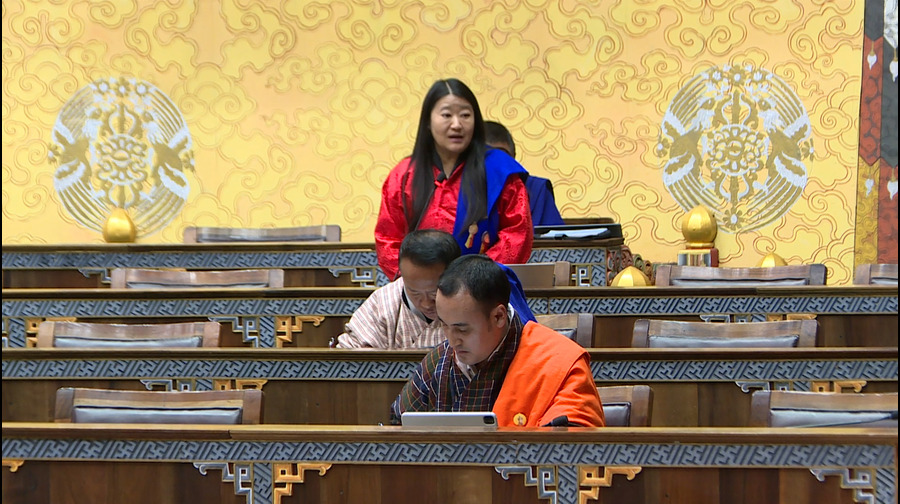
The Accelerating Maternal and Child Health Programme, known as the 1,000 Golden Days initiative, has reached more than 7,500 women since its launch in February this year. This is according to the health minister. However, during the question hour session in the National Assembly, the Kengkhar-Weringla MP has raised concerns over inconsistent eligibility and delays in payment.
The Accelerating Maternal and Child Health Programme was launched to strengthen maternal and child health during the first 1,000 days of life. The scheme provides mothers with a monthly Nu 1,500 and aims at helping mothers cover hospital visit, travel expenses, and nutritional needs.
The three-year programme, worth more than Nu 200 M, is funded by the Japanese government and administered through the World Bank.
Dorji Wangmo, the Kengkhar-Weringla MP questioned disparities in the implementation of the incentive.
“Some women who were eligible for the incentive did not receive it while some with the same difficulties received it. This is unfair for them. I would like to ask if there are any solutions to avoid this in the future.”
In response, health minister Tandin Wangchuk assured that there is no disparity in providing the incentive. He added that if there is any, they will look into it.
“Eligible women who have not received the incentive can share their grievances to our health workers. Beyond the questionnaire, our health workers will look at the situation of the women too.”
He added that they are working as per the eligibility criteria set by the donor.
“Since the funding comes from a foreign partner, and they have set up certain criteria. If we do not abide by their criteria, there is risk of losing funds. The public health sector has worked a lot on this and we now have a separate project office and a dedicated helpline for it.”
The government hopes that strengthening the initiative will lead to better maternal and child health outcomes across the country.
Deki Lhazom