 More than a thousand people now carry the Bhutanese Sign Language app in their pockets. What began as a digital initiative has steadily grown into a bridge between Bhutan’s deaf community and the hearing world. In homes, classrooms and everyday life, an app is helping turn silence into connection.
The Wangsel Institute for the Deaf launched the Bhutanese Sign Language app in December 2023 with support from the Bhutan Foundation. It promotes inclusivity by making sign language accessible to the wider public. It now has over 1,000 users and offers a dictionary, quizzes and offline access.
Parents of deaf children are already experiencing the impact.
Choezang says the app has transformed communication at home with her deaf son, Jigme Chogyel Wangchuk.
In the past, parents could only learn sign language by attending classes at the institute, often alongside their children.
Choezang said, “With the app now, parents can help our children more with their homework. For example, if we have to look up an alphabet, we can just open the app and check if it is correct.”
“I was not aware of the Bhutanese sign language app. I came across it during the sign language class for parents, and I downloaded it. Since then, the app has been like a guiding light for me. I refer to it whenever I have difficulty communicating with my son, and I also learn new things,” said Passang Lhamo Tamang, another parent.
According to the institute, about two per cent of the population is deaf, yet the number of people formally trained in Bhutanese Sign Language remains far lower. The institute enrols four to six new students each year. This means that many children were first exposed to sign language only when they came to the institute at around six years old. By then, experts say it is too late to learn the language basics.
Behind the steady expansion of the app is the institute’s Research Department. The department identifies new words, concepts and frequently used terms that require standardised signs. Once a sign is developed and approved, the team records demonstration videos and uploads them onto the app. The process ensures that vocabulary continues to grow and remains relevant, while also maintaining consistency in Bhutanese Sign Language nationwide.
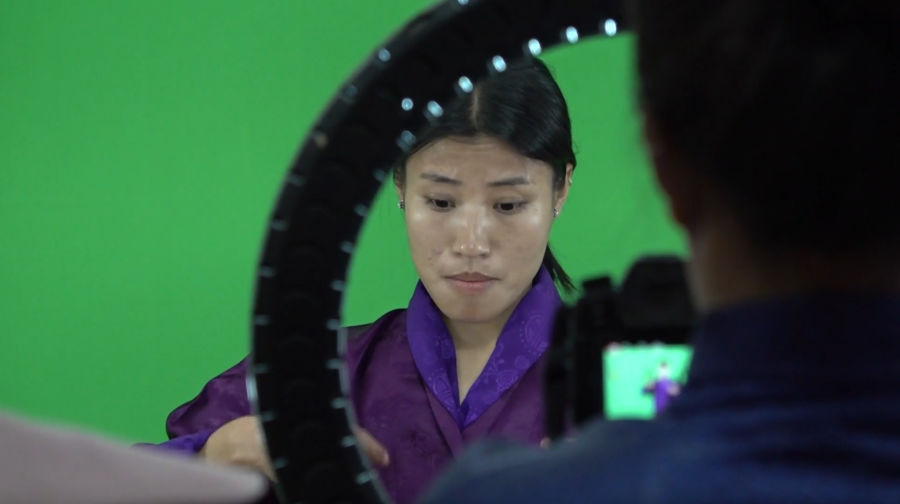 Early exposure reduces the risk of language deprivation and helps children adjust better in class.
“The app allows parents of deaf children to begin learning sign language even before enrolling them at Wangsel Institute. Enabling early communication at home, it helps children express their feelings and strengthens understanding and interaction between parents and their deaf children,” said Tenzin Dralha, a sign language instructor at the institute.
With the app’s new update, the institute and parents are encouraging more people to learn sign language.
Choezang said, “For deaf children, what matters is support. Not support in the form of money, but if people use the app and learn sign languages, our children would also be on equal grounds with the rest of the people.”
What started as a 1.3 million ngultrum project is now becoming a living, evolving resource. More than just an application, it is helping families communicate earlier, teachers teach better, and deaf Bhutanese participate more fully in society, one sign at a time.
Karma Samten Wangda, Paro