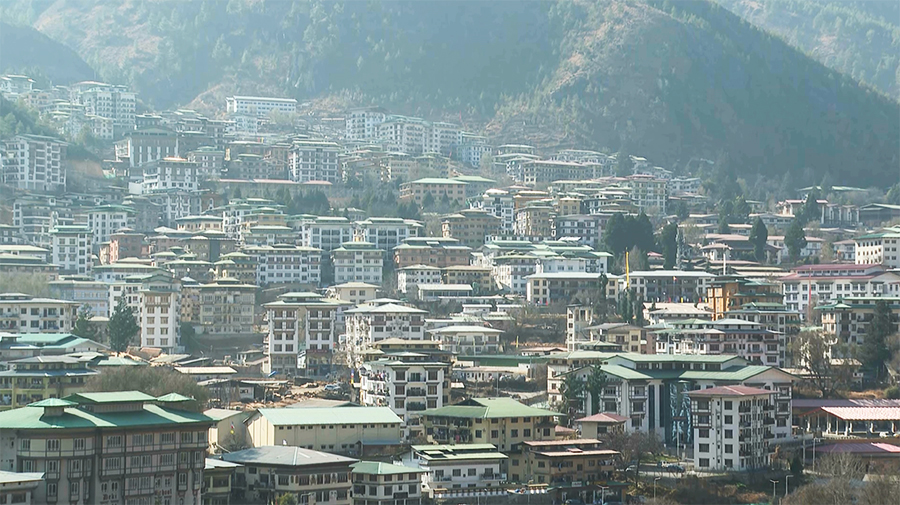
 Experts from the National Society for Earthquake Technology-Nepal have warned that “earthquakes do not kill people, unsafe buildings do.” Their assessment has found much of Thimphu’s infrastructure to be vulnerable, and that the first few hours would be chaotic in the event of a major earthquake.
With the capital housing the largest concentration of population, government institutions and critical infrastructure, authorities say the consequences would be unprecedented.
A scientific assessment, carried out since July last year, has found that the highest number of fatalities and the most severe disruption would occur in Thimphu.
At a tabletop simulation exercise, officials examined how the city would respond in the first hours after such a disaster.
“If a major earthquake were to strike this evening, we are not ready. We require advanced search-and-rescue equipment such as cutters, thermal imaging cameras and detection devices, but we do not currently have these in the country. Therefore, we are not prepared to respond to a high-magnitude earthquake,” said Karma Galay, the director general of the Department of Local Governance and Disaster Management.
The assessment identifies structural vulnerability as the greatest threat.
According to experts, nearly forty per cent of Thimphu’s houses are traditional load-bearing masonry buildings, many of them ageing and poorly maintained.
Even some newer buildings are at risk. Experts point to open parking or commercial spaces on the ground floors, which weaken a building’s ability to withstand seismic forces.
Critical facilities are also exposed.
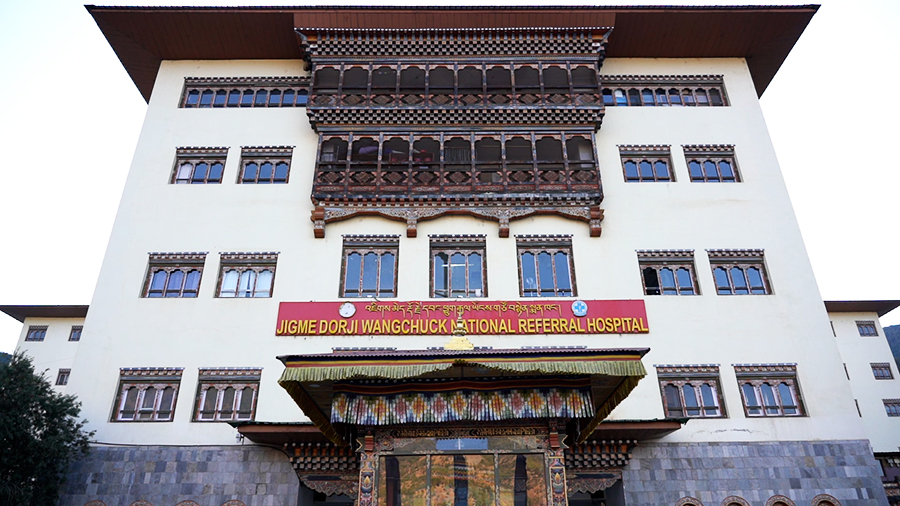 The National Referral Hospital has been identified as highly vulnerable. Parts of the structure risk major damage, and unanchored medical equipment could shift or topple during shaking, potentially paralysing emergency services when casualties surge.
Experts carried out rapid visual assessments of structures and infrastructure in Thimphu and warned that the immediate aftermath would be chaotic.
“The first six hours after a major earthquake will be extremely difficult. It will be chaotic. Hospitals may be damaged, roads could be blocked, and emergency responders are likely to be overwhelmed,” said Surya N. Shrestha, an earthquake expert with the National Society for Earthquake Technology, Nepal.
Assessments of bridges, substations and water treatment facilities suggest that older structures could sustain heavy damage. Some bridges may become impassable.
Electrical substations and water supply systems could fail, not only because of structural damage, but due to unsecured machinery and rigidly connected pipelines.
That would mean possible fire outbreaks, water shortages, power disruption and severe strain on emergency services, all within the first few hours.
To mitigate these risks, authorities say planning is underway.
The contingency framework outlines first aid deployment, temporary shelter arrangements, restoration of essential services, and procedures to seek international assistance if required.
A full-scale field simulation is scheduled for May to test operational readiness under realistic conditions.
Officials stress that while earthquakes cannot be prevented, their impact can be significantly reduced through stronger enforcement of building codes, retrofitting of vulnerable structures and investment in response capacity.
They say that the simulation exercise is a step forward.
Namgay Dema
Edited by Phub Gyem