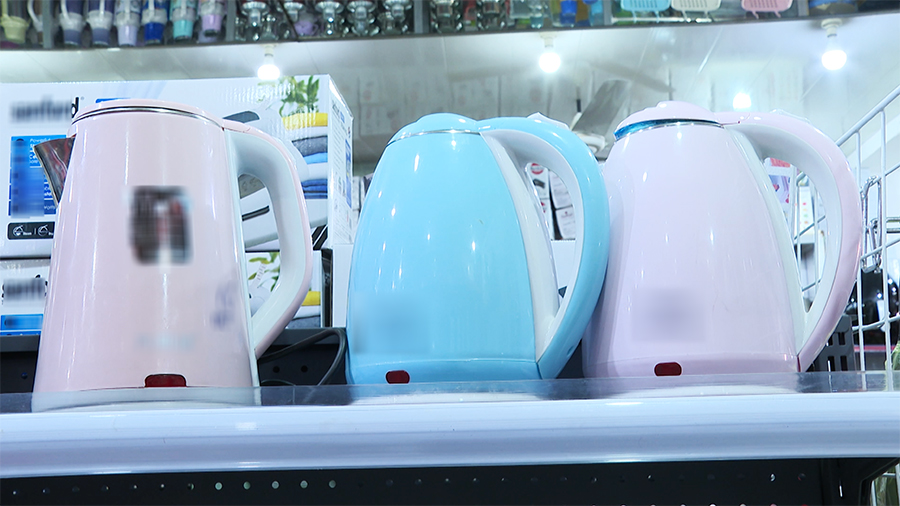
 From preparing morning tea to instant noodles, electric plastic kettles are now among the most commonly used kitchen appliances in Bhutan. While convenient, boiling water in a plastic electric kettle can be hazardous to health. A recent international study has found that a new plastic electric kettle can release millions of nanoplastic particles into boiled water, particularly when the kettle is new, potentially leading to health issues.
Electric kettles have become essential household tools due to their high efficiency, boiling water in three to four minutes.
However, experts warn that prolonged consumption of water boiled in instant kettles may pose potential health risks in the long run.
A study, conducted on polypropylene plastic kettles by a team of researchers from institutions in Australia and China, found that a new kettle can release an average of 11.8 million nanoplastic particles per millilitre of water during its first boil.
This is roughly equal to three billion particles in an average 250 ml cup.
Nanoplastics are particles smaller than one micrometre, far thinner than a human hair and invisible to the naked eye and small enough to potentially pass through biological barriers in the human body.
These tiny particles act as vectors. Once inside the body, they have the ability to adsorb and carry other hazardous chemical pollutants.
Pema Chophel, the Deputy Chief Laboratory Officer with the Royal Centre for Disease Control, says it is a growing concern globally, with a lot of studies and research underway on micro and nanoplastics.
“There is evidence showing that it has cellular impact whereby it can lead to inflammation, oxidative stress, and likewise it can also lead to bioaccumulation whereby if we keep on inhaling and drinking a lot of plastic particles it can accumulate in our body.”
While the kettle study focuses on nanoplastics, a recent local research conducted in Thimphu by the Royal Centre for Disease Control identified larger microplastics in every water source tested in Thimphu, including streams, rivers, and groundwater. RCDC recently sampled around 55 sites across the capital, finding microplastics in every single source including rivers, groundwater, and even treated municipal taps.
The study by the Queensland University highlights several significant health concerns including heart-related risk and the effect on the human brain and cells.
However, the study also notes that definitive studies on long-term clinical outcomes are still being developed.
To lower exposure, researchers recommend boiling and discarding water from the first few uses of a new plastic kettle. By the tenth boil, the release of nanoplastics drops by 73 per cent, eventually declining by over 96 per cent after 150 cycles.
“If you have purchased a new plastic kettle, it is advisable to boil the water several times, for more than 5 to 10 times, and you can throw the water. Generally, we should minimise the use of plastics and look for alternatives wherever possible,” added Pema Chophel.
As scientific evidence grows, simple preventive measures and greater awareness may help protect public health from risks that are invisible but potentially harmful.
Kinley Bidha
Edited by Phub Gyem