 Invisible to the eye but powerful in impact, HCFCs or hydrochlorofluorocarbons are chemicals once widely used to cool homes and refrigeration systems, silently harming the ozone layer. Bhutan is now accelerating efforts to phase them out. Under the Montreal Protocol and the country’s latest ozone regulations, Bhutan is working towards a complete phase-out of ozone-depleting HCFCs by 2035.
Bhutan’s HCFC phase-out journey began in 2013, with strong emphasis on training and capacity building for technicians.
For now, the use of HCFCs is limited and strictly regulated by National Ozone Unit.
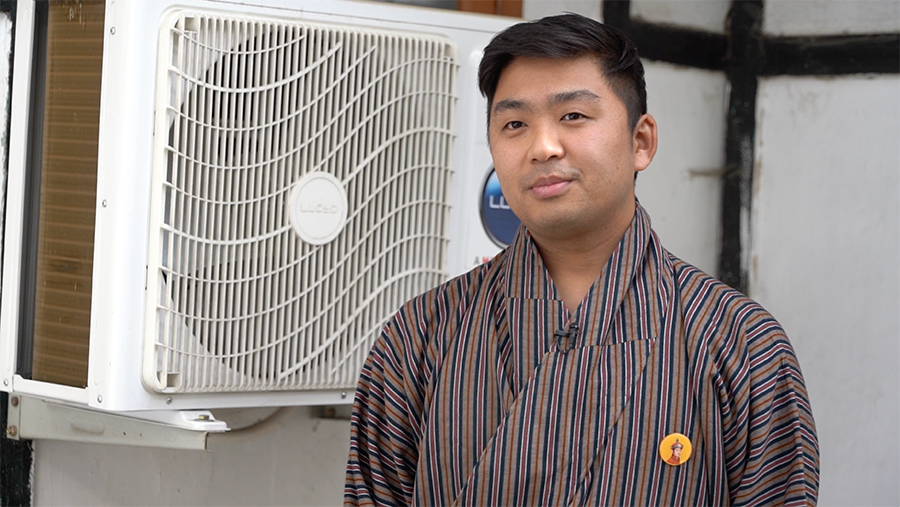
Kinley Dorji, Project Officer of Environment Assessment Division, Department of Environment and Climate Change said, “Bhutan’s HCFC consumption is quite limited and it’s concentrated in a few specific sectors. So, the HCFC consumption that is currently in the country is more specifically from the hotel industries where they still use it for HCFC based equipment that are very old such as split air conditioners as well as commercial refrigerators.”
Currently, Bhutan is only allowed to import 127 kg of HCFCs per year. Officials say it is mainly used for servicing old systems that were imported before restrictions were put in place.
Therefore, government offices and institutions that still use old HCFC-based equipment are also being asked to formally surrender them to the National Ozone Unit, so the refrigerants can be safely recovered and destroyed.
The project officer said “Your cooling should not come at the cost of warming the planet. Our cooling, it’s a shared responsibility, be it government agencies, private entities, business owners. What we would like to encourage is that these agencies come forward and consult in case of uncertainties during the procurement of cooling equipment, which are allowed, which are prohibited, which are restricted, so that they are in compliance with our national regulations.”
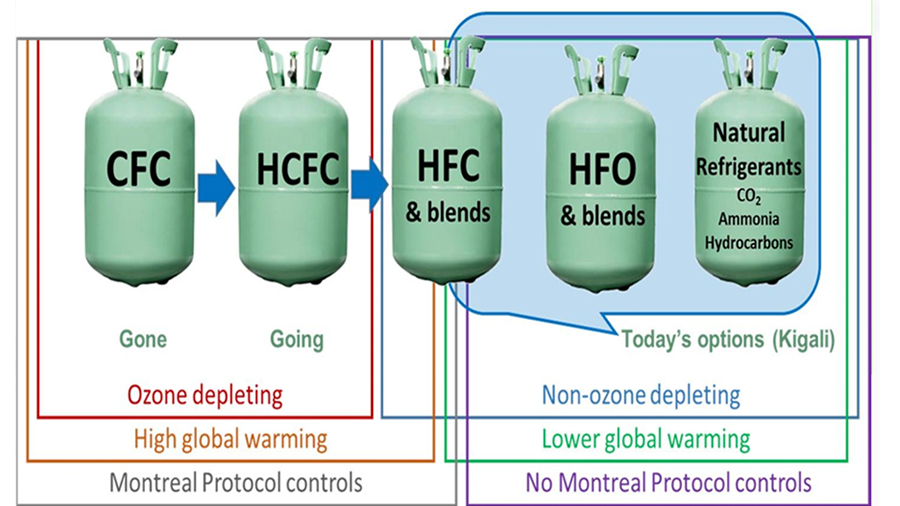
Officials say the new cooling and refrigeration systems are installed with HCF, hydroflurocarbons, as part of the transition from ozone-depleting HCFCs.
However, as the country moves from HCFCs to HCF and eventually to natural gases, lack of expertise and technicians to deal with these is one of the major challenges. And safety has become a key concern.
The project officer said, “As the world is transitioning from HCFC to HFCs and then the new hydrocarbons which are flammable, the government is very well aware of how flammable this is and how accident-prone these are. And one of the challenges that we face at the moment is not having an expertise that can handle these flammable refrigerants. So going forward, the government still aims to focus on capacity building workshops and training for our technicians as well as our institute instructors with the help from international donors, investors focusing on how to handle these flammable refrigerants, particularly AC installation for example, good servicing practices, and risk management.”
The goal is to make technicians in the market competent as well as confident to handle these flammable refrigerants while not compromising on quality and safety of the equipment.
As Bhutan moves towards its 2035 deadline, officials say the message is clear: protecting the ozone layer starts with informed choices today, choices that keep people safe, businesses adhering to regulations, and the environment protected for generations to come.
Devika Pradhan