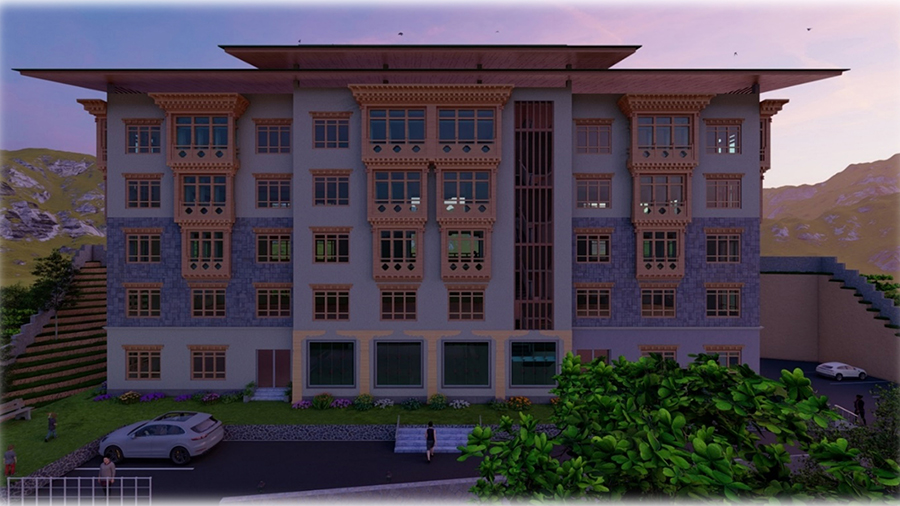
 To address the long-standing accommodation and transportation challenges faced by medical students, the Faculty of Traditional Medicine under the Khesar Gyalpo University of Medical Sciences is constructing a new hostel. Its ground-breaking ceremony was held today at Kawajangsa in Thimphu.
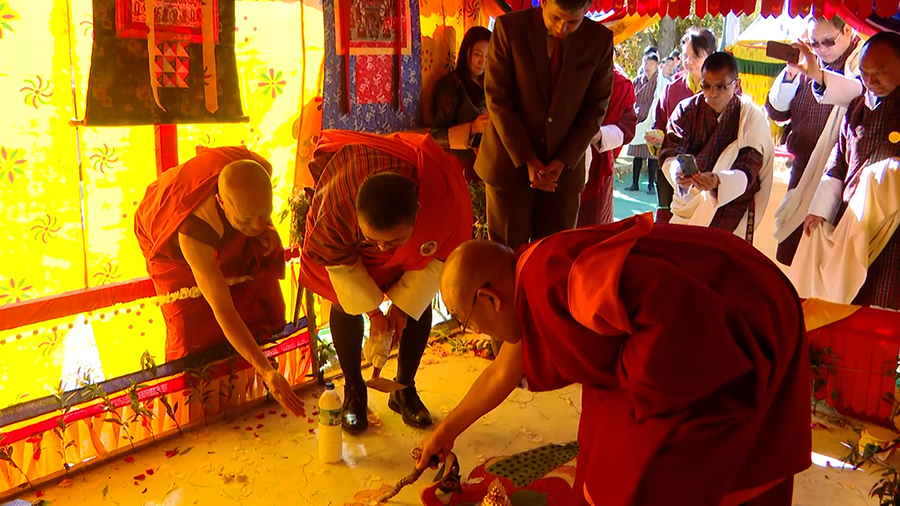 The ground-breaking ceremony for the construction of the girls’ hostel at the Faculty of Traditional Medicine was conducted by the Tshog-ki Lopen of the Zhung Dratshang.
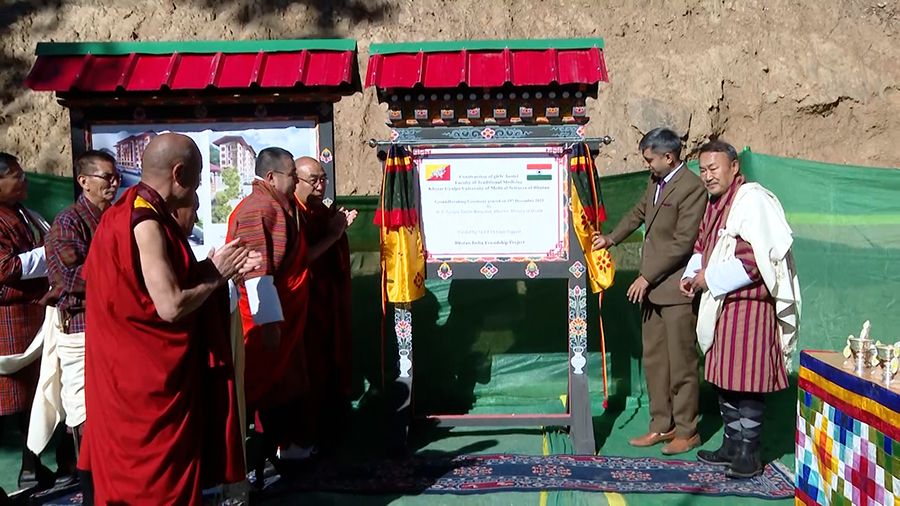 The health minister and the Deputy Chief of Mission of the Embassy of India to Bhutan attended the event.
During the ceremony, the health minister said that with modernization and changing lifestyles, the demand for skilled traditional medicine practitioners continues to grow, highlighting the need to strengthen education, training, and infrastructure in Sowa Rigpa.
“This new girls’ hostel will offer an environment that supports learning, wellbeing, and personal growth. Its proximity to the teaching hospital addresses a critical need in clinical education, ensuring students can fully participate in hands-on learning without logistical barriers.”
The five-storey girls’ hostel is expected to ease accommodation challenges, particularly for female trainees, and provide a safe and appropriate living environment.
Currently, boys and girls share the same hostel, while some monk trainees are housed in academic and administrative buildings.
Dungtsho Sangay Wangdi, Dean of Faculty of Traditional Medicine said, “Currently, girls and boys are accommodated in the same building at the Faculty of Traditional Medicine, which presents several challenges. After the completion of the new girls’ hostel, female students will have a separate hostel. At present, the dining hall is small, but the new hostel will include a large dining hall on the ground floor, which will be more convenient for both girls and boys. With better and more comfortable facilities, students will have improved opportunities to focus on their studies.”
The project, estimated to cost Nu 100 M, is being supported through Project Tied Assistance from the Government of India.
With tender works completed, construction is expected to begin soon and be completed within three years.
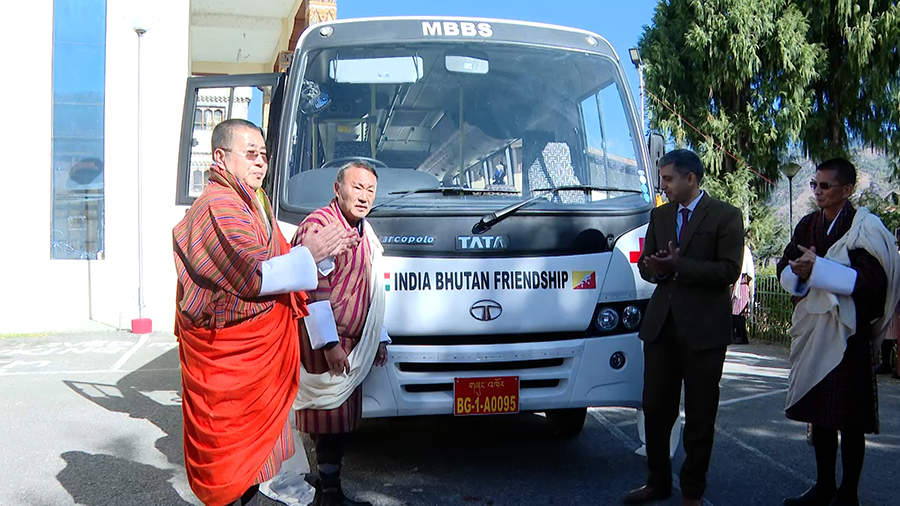 On the same occasion, the Government of India handed over a 32-seater Tata bus to support Bhutan’s MBBS programme.
Bhutan launched its MBBS programme last year with 24 students.
From their second year, students undergo clinical training at the National Referral Hospital. With hostels located eight kilometres away in Taba, transportation had been a major challenge.
The newly handed-over bus, worth over Nu 3.1 M will now ensure safe and reliable transport for the MBBS students.
These initiatives highlight the strong partnership between Bhutan and India and their shared commitment to strengthening healthcare education and infrastructure in the country.
Karma Wangdi