 Bhutan is set to strengthen its weather forecasting and early warning capabilities with the establishment of the country’s first Upper-Air Observation Facility in Tsirang. It is a major infrastructure project led by the National Centre for Hydrology and Meteorology. The project is scheduled to begin construction next month.
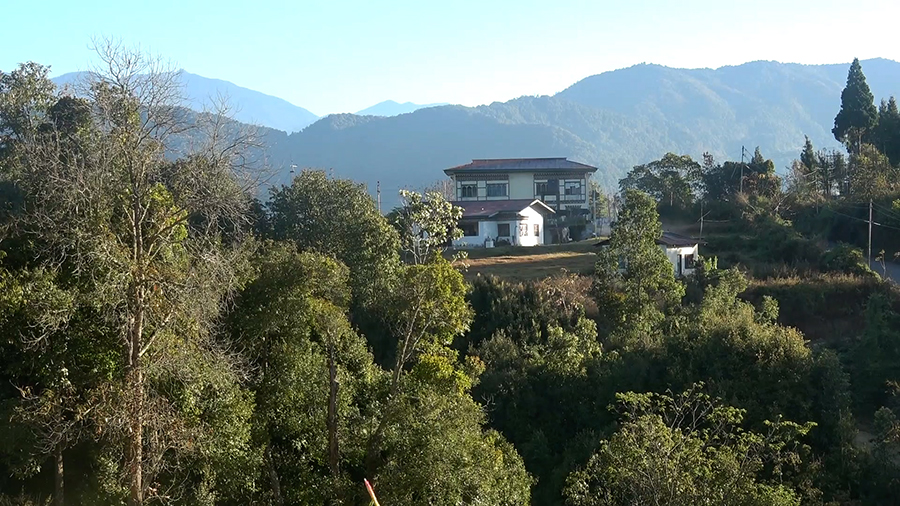 The Upper-Air Observation Facility, supported by the Swiss-based Systematic Observations Financing Facility, will be constructed in Damphu, Tsirang.
Upper-Air Observation Facility is a station equipped with instruments to measure meteorological conditions in the atmosphere above the Earth’s surface, typically using radiosondes or weather balloons.
Currently, tender evaluation is ongoing for the construction of the station.
Once operational, the facility will release weather balloons twice every day, at 6 AM and 6 PM.
The balloons, fitted with radiosondes, will measure temperature, humidity, pressure and wind speed and direction as they rise up to 30 to 40 kilometres into the atmosphere.
Each launch can collect real-time weather data across a radius of 300 to 400 kilometres, transmitting updates every one to two seconds back to ground stations.
The data will be shared with the World Meteorological Organisation, officially integrating Bhutan into the Global Basic Observing Network, a worldwide system that strengthens regional and global weather forecasts.
Thinley Phuntsho, Project Manager of SOFF Bhutan Project said, “Tsirang was selected because of its central location, suitable terrain and ideal elevation of around 1,500 metres above sea level. The site is easily accessible by road and is also close to the Gelephu Mindfulness City.”
The facility will be built on a 90-decimal plot at an altitude of over 1500 metres.
It will include a two-level structure with offices, calibration and server rooms on the upper floor, while the lower level will house a hydrogen generator shed, balloon filling area, storage space and a dedicated launch pad.
Officials say the introduction of upper-air data will significantly improve forecasting accuracy by up to 60 per cent and enable more reliable seven- to ten-day weather predictions.
The Project Manager added that “Our surface stations only show what is happening at ground level. With upper-air observations, we will have our own data instead of relying on regional partners. This will allow us to better analyse and understand our weather and climate, leading to more accurate forecasts that improve livelihoods and everyday planning.”
The project aligns with the United Nations’ Early Warnings for All initiative, which aims to ensure life-saving early warning systems reach everyone by 2027.
Construction is expected to be completed by mid of 2027, with full operations anticipated to be commence by the end of 2027.
According to the NCHM, this will mark a major milestone in Bhutan’s efforts to strengthen disaster preparedness, aviation safety and climate resilience.
Namgay Dem