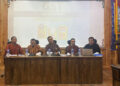
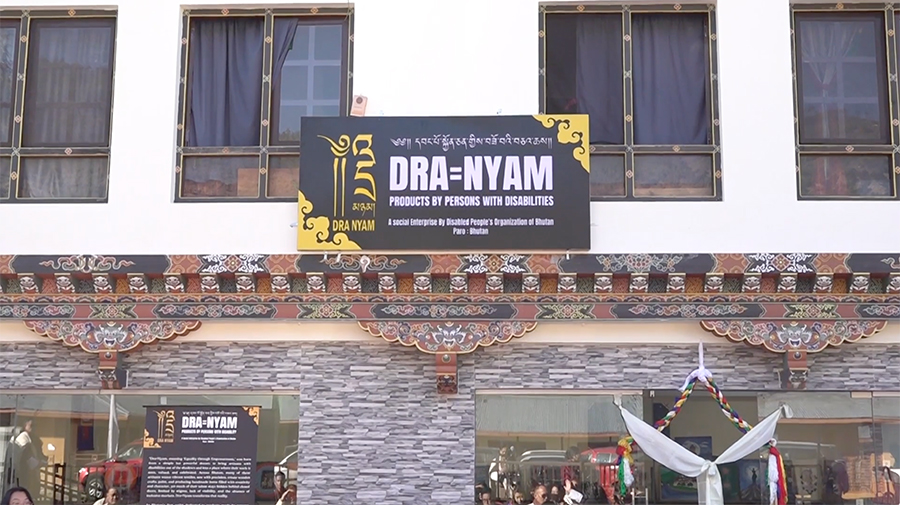
Persons with disabilities in the country now have a dedicated platform to market their products. Celebrating International Day of Persons with Disabilities, “Dra=Nyam,” Bhutan’s first permanent outlet for products made by persons with disabilities, was launched in Paro yesterday. The store offers trained artisans an opportunity to showcase and sell their work and talents, which until now have had limited access to markets.
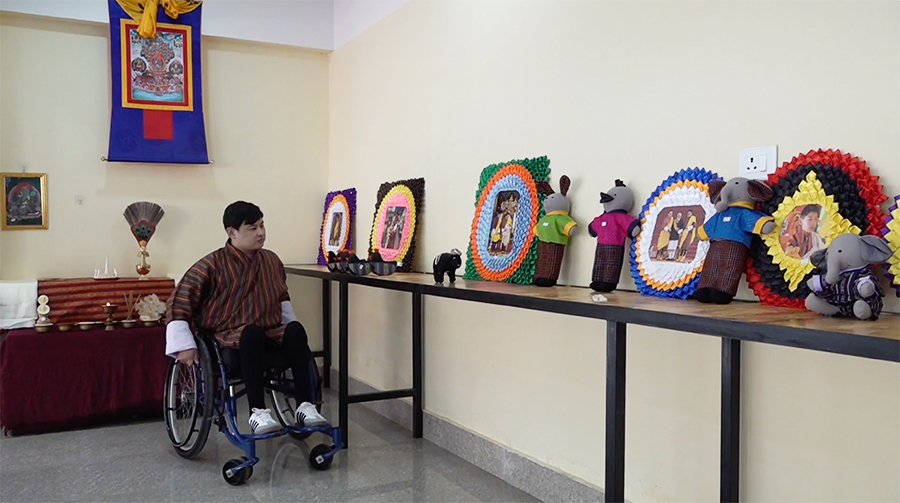
Twenty-five-year-old Sonam Dorji is one of the first artisans to display his products at Dra=Nyam, which translates to “Equality through Empowerment”.
After a workplace accident at the age of 22, Sonam has been confined to his wheelchair. He discovered a passion for crafting and taught himself the art through countless online tutorials. Until the outlet opened, he depended entirely on his sister to market his handicrafts, often sending them with her in the hope of finding buyers.
Sonam Dorji said, “My sister has been helping me buy the materials and sell my handicrafts. I have to ask her for the things I need, and she helps me get the supplies and market the products.”
He says the outlet not only allows him to sell his products but also helps him regain a sense of independence after many years.
“I don’t think staying in bed feeling sorry for ourselves is an option. With a platform like this, we can not only sell what we make but also keep ourselves meaningfully engaged. It helps occupy our minds and gives us a way to earn a living,” added Sonam.
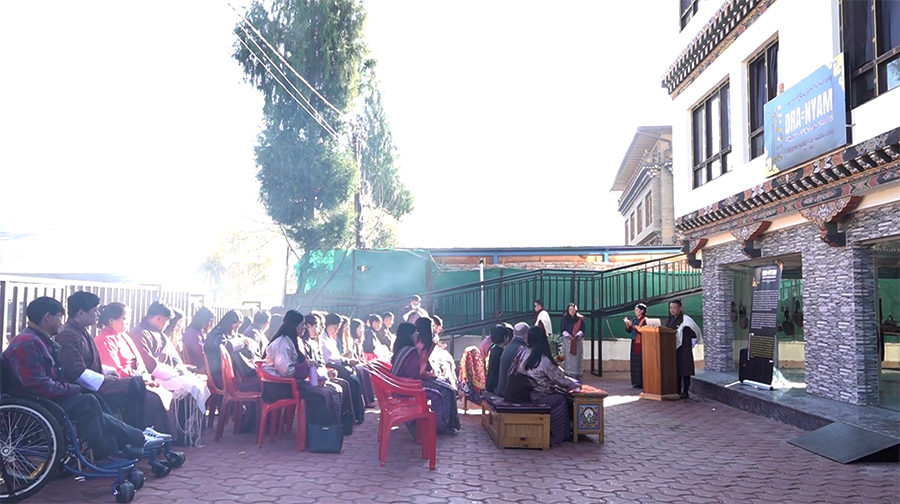 Supported by the Bhutan Foundation’s Small Grants Programme and facilitated by the Disabled People’s Organisation of Bhutan, Dra=Nyam aims to give artisans both recognition and a stable market.
Organisers say such platforms are increasingly needed as more people with disabilities acquire skills but lack market access. Many trained artisans still work from home due to limited visibility, social stigma, and the absence of inclusive business spaces, leaving their income uncertain and their work overlooked.
“Even after skilling, for many persons with disabilities, there has never been an outlet where they can showcase their talent and then sell their products. So, Dra=Nyam, which means equality through empowerment, is an outlet where persons with disabilities can sell their products and then earn a decent living, where they stay in the comfort of their community, and not necessarily have to go to the national capital to make an income,” said Kinley Wangchuk, the executive director of the Disabled People’s Organisation of Bhutan.
The organisers said that Dra=Nyam will help the public see ability, and not disability.
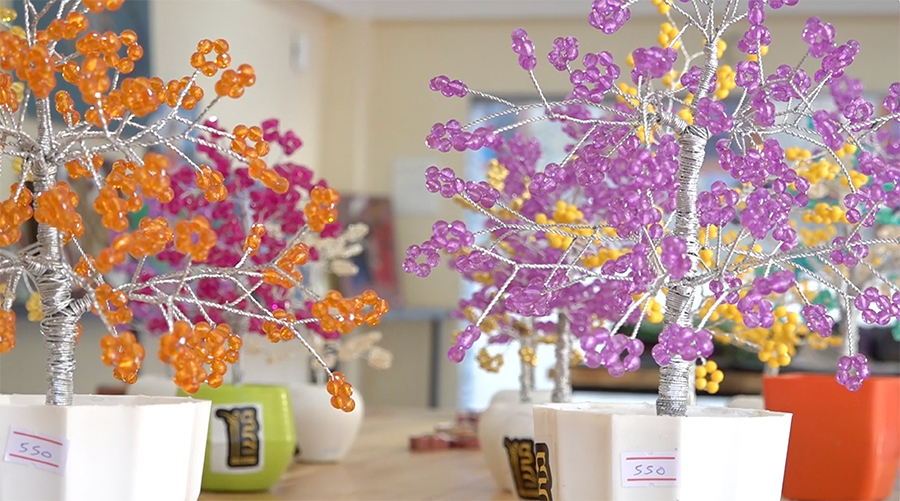 Several artisans present at the launch said the space gives them confidence to create more and the assurance that their work will be valued.
Leki Lhadon said, “Earlier, I had to travel to every district to market my products. With this outlet, although I still need to promote my work, I believe it will make things much easier.”
Tandin Lham said, “I hope this outlet creates more opportunities for people with disabilities like us.”
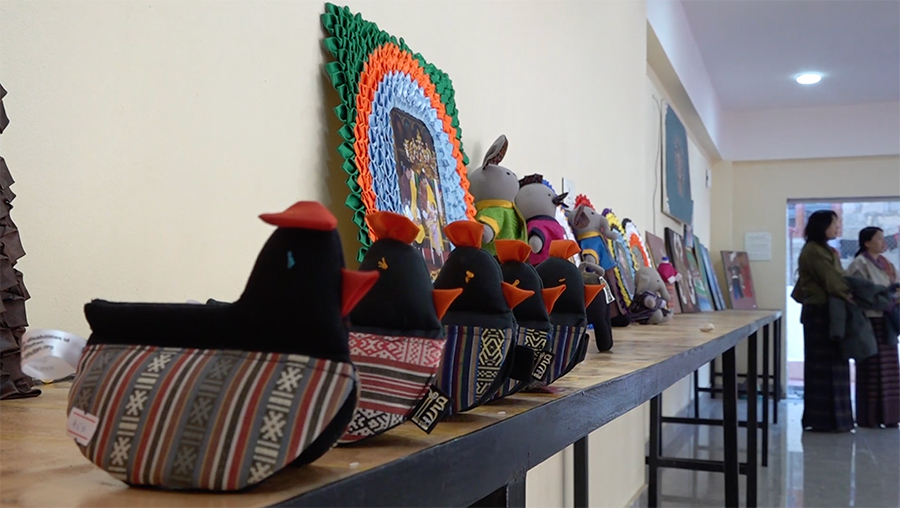 For the artisans, the outlet is more than a shop. The outlet represents a long-awaited opportunity to earn from their craft and be recognised as professional creators rather than beneficiaries of support.
Karma Samten Wangda, Paro
Edited by Phub Gyem