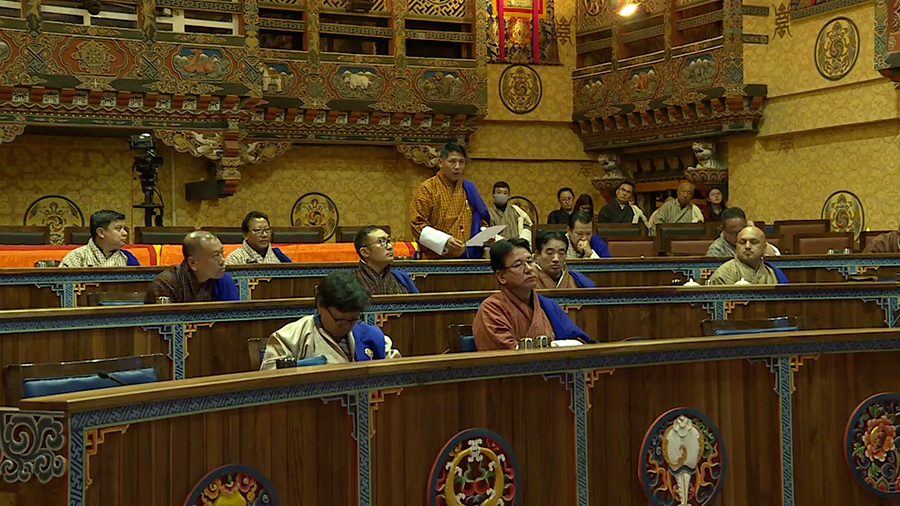
 The Natural Resources and Environment Committee of National Council recommended initiating minimal water tariff to ensure water safety and strengthen watershed management. However, some Members of the Parliament raised concern about the feasibility of a water tariff. This recommendation was part of the Review Report on Climate Resilient Watershed Management.
Some Members of the Parliament said that people are already paying water bill and argued that there is no need for an additional tariff.
Dago Tsheringla, Haa MP/Deputy Chairperson of National Council said, “If a minimal tariff is imposed on the water users, sense of belonging among people would be undermined and management of the water sources remains doubtful.”
The committee responded that the tariff will be affordable and equitable.
Leki Tshering, the Chairperson of the committee said, “It is those who live on high altitudes who are looking after the water sources. However, water users are those living in the valleys. When water is utilised by those settled below and those looking after the source don’t get anything, one reason of recommending the minimal tariff is this.”
As part of the same recommendation, the committee also proposed providing electricity subsidies to farmers using water pumps for irrigation. However, members raised concerns saying that rural communities already receive 100 units of free electricity per month.
Ugyen Tshering, a committee member said, “Government provided water pumps to each chiwogs. When they use that pump, it requires electricity and are of high voltage. Ultimately, their electricity bills come high. Some are saying 100 units is already on subsidy but it is for the rural and general consumption. Those pumping irrigation water are not entitled to the provision.”
Jamyang Namgyal, Pema Gatshel MP, National Council said, “Some places are required to pump irrigation water from rivers and the report recommends providing electricity subsidy to those pumping irrigation water. Is it a national issue? Can the committee explain how many districts, communities, households and people require electricity to pump irrigation water?”
The National Council has forwarded the recommendation for further deliberation in an internal meeting, along with several other recommendations.
The report will be adopted on the 22nd of this month.
Singye Dema & Kelzang Chhophyel