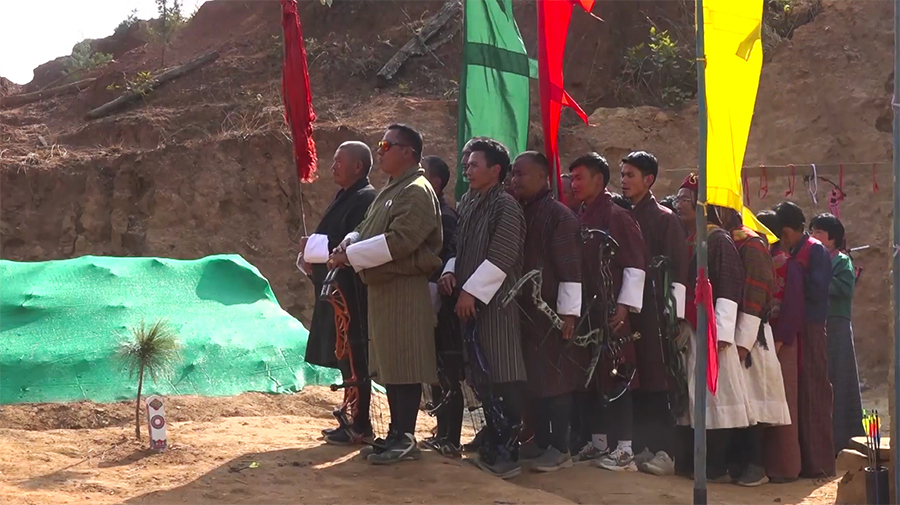
 As archery season arrives, a rare match unfolds between two communities from two districts, Lingmukha in Punakha and Martalungchu in Wangdue Phodrang. Played over four days with unusually small targets, the tradition known as Wang-Lingbu Chhondha goes far beyond competition. It is a living cultural bond that blends sport, belief, and unity between the people of Wangdue and Punakha.
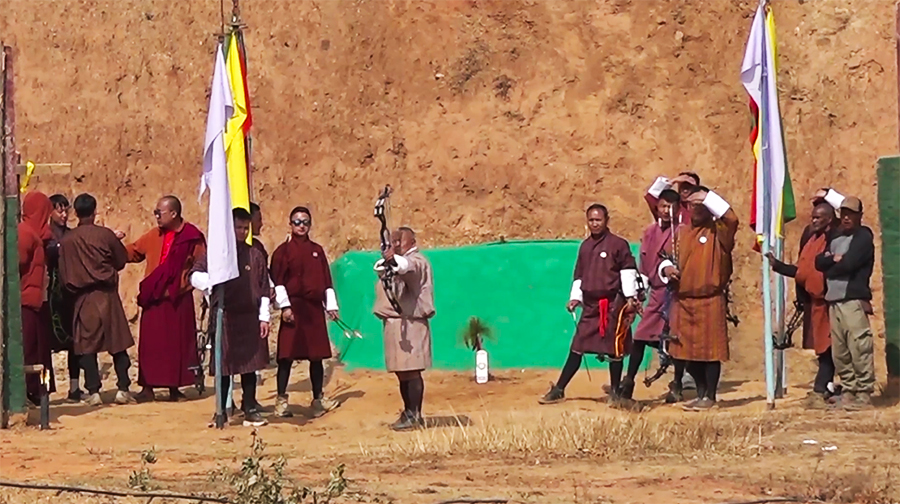 70-year-old Phuba from Punakha is the oldest player in the match. He has been participating in the competition for nearly forty years now.
For him, it is not just a form of entertainment, but a commitment to preserve his age-old tradition alongside his friends. Although the game can be physically demanding at his age, he gives his best and never lets his teammates feel discouraged.
Amid concerns over the decline of tradition due to changing times, his presence in the match is likely to be a final one this time. Although his interest may remain alive, it can be a heartbreaking separation from the tradition. But it must be accepted in light of his age.
“This is a tradition that has existed for a long time. Therefore, I am participating in this game to help preserve it. Likewise, I want my participation to serve as a legacy for future generations.”
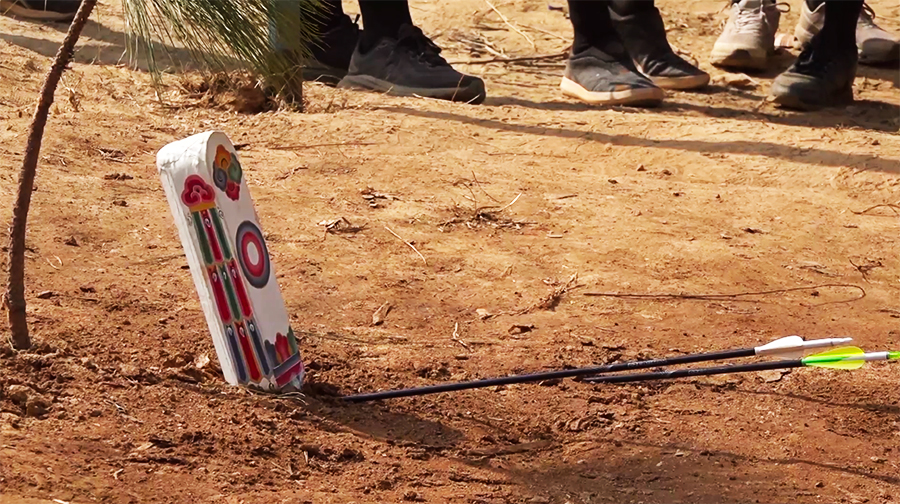 Unlike other archery matches, this competition uses small targets measuring about one foot in height and just over five inches in width. Even skilled archers rarely hit the targets, and some players finish the day without a single hit.
Each team makes its own target, often inserting relics inside. According to tradition, the targets are wrapped in religious scarves and a ceremony is performed before they are taken to the archery range.
They also bring in their astrologers and display flags representing their protector deities at the archery range to increase the chances of winning.
Locals recall travelling on horseback to participate in the match in earlier times, when the host team would also serve lavish dishes to players and spectators alike.
However, with time and changing lifestyles, the practice has gradually disappeared. Although there is no clear written history, people believe this tradition dates back to the time of His Majesty the third king.
This annual event is more than a tradition.
“Even for our paddy cultivation, we depend on irrigation water from Lingmukha. Therefore, I feel that this reflects the long-standing good relationship between the people of Wang and Lingmukha. Our drinking water source is also located in their village, and they have never raised any objections so far,” said Namgay Thinley, Martalungchu, Thedtsho Gewog, Wangdue Phodrang.
“Relationship is extremely important in our lives. During the four-day match, every person from each household gathers here. This allows us to get to know each other and build a strong friendship. Through these relationships, people find it easier to receive any kind of help within the community,” said Kencho Namgay, Lingmukha Gewog, Punakha.
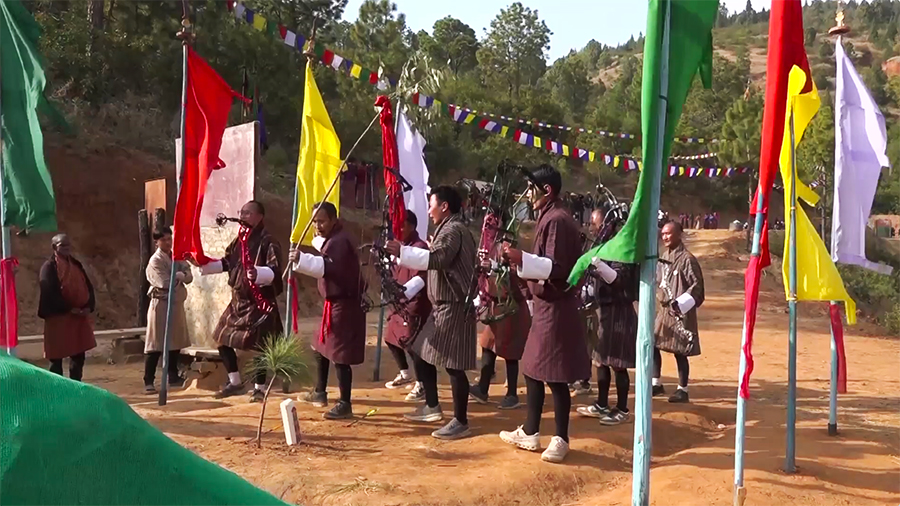 The match is usually held during this time of year and is played alternately in Punakha and Wangdue Phodrang. Locals also believe that this tradition blesses them with timely rainfall.
More than a game, Wang-Lingbu Chhondha remains a powerful bond uniting communities and preserving Bhutan’s living heritage.
Changa Dorji, Wangdue Phodrang
Edited by Tandin Phuntsho