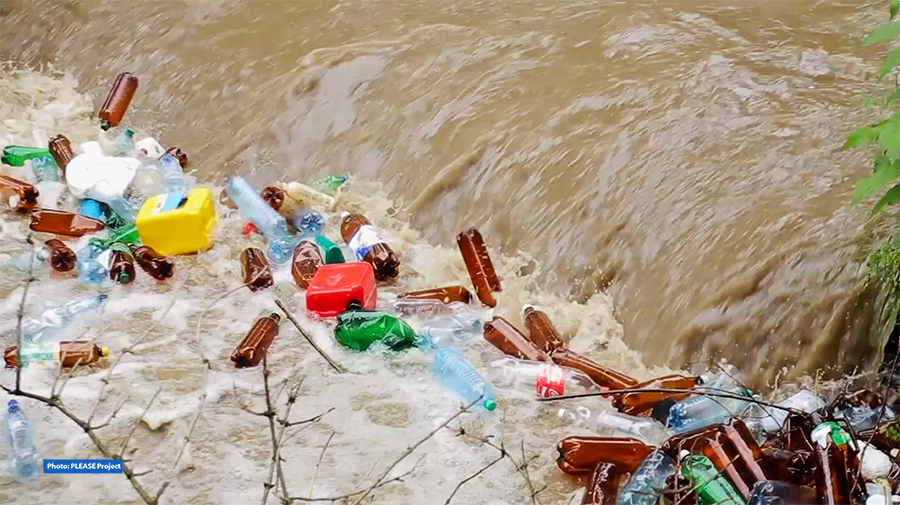
 Plastic waste choking Bhutan’s rivers is emerging as a serious threat, risking not just aquatic life but also threatening water safety and public health. Environmental specialists warn that invisible microplastics are already entering food chains while clogged waterways increase flood risks across towns and settlements.
What were once pure mountain streams are gradually becoming polluted.
According to the National Waste Inventory Survey 2019, Bhutan generates 172 metric tonnes of waste each day, which is roughly the weight of 50 coaster buses. And around 17 per cent consists of plastic.
An increasing amount of this plastic waste is entering rivers, contaminating them.
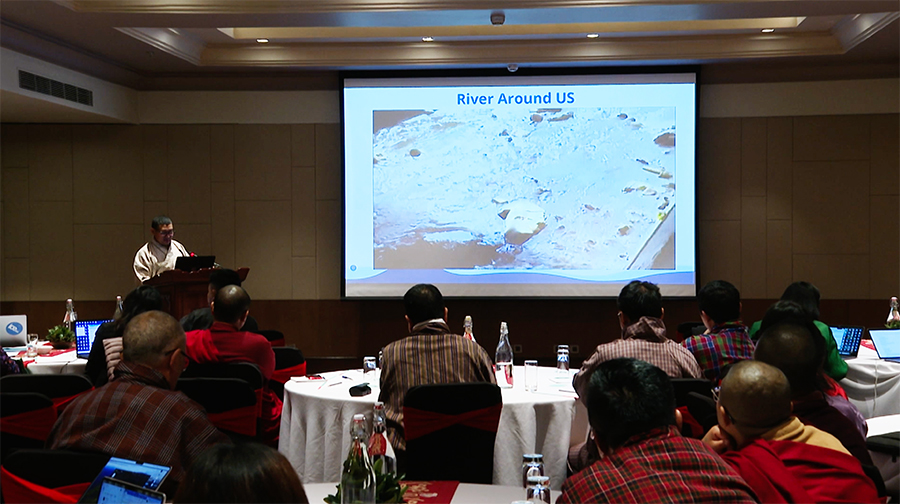 The National Consultation on Riverine Litter Action in Bhutan reported that rising plastic consumption, poor household waste segregation, and the direct dumping of waste into drains and along riverbanks are impacting the country’s waterways.
This pollution is harming aquatic life and damaging fragile ecosystems. Even more alarming, toxic chemicals leaching from plastics are entering the food chain through aquatic species and eventually reaching the human body.
“Plastic itself is not only the danger, but the additives and chemicals it contains will leach into the water and finally, that will enter our bodies through aquatic life and the fish that we are eating. Scientists found that microplastics are everywhere now, and this is a biggest health risk because it affects our hormonal system and increase the cancer risk,” said Sarojinie Jayasekara, Environment and Social Development Specialist with PLEASE Project.
With country’s poor drainage and sewerage system, plastic waste has seen worsening urban flooding. Clogged drainage often causes rivers and streams to overflow into homes and public spaces.
“The amount of waste entering rivers and streams has increased over the years, mainly due to increased population and increase in infrastructure over the years. Definitely, if you look into rivers and streams these days, we can see lot of plastic wastes and many other wastes,” Sonam Wangchuk, said Chief Environment Officer with the Thimphu Thromde.
Even from a religious point of view, river pollution violates spiritual values of compassion and non-harm as nature and water are considered sacred in many traditions.
Kinley Penjor, the Chief Programme Officer of the Central Monastic Body’s Religion and Health Programme, said, “The Buddhist philosophy emphasies never to harm others. Inside the river, there are lots of sentient beings. So, by throwing trash or waste in the river, it will harm the sentient beings in the river as well as the human beings.”
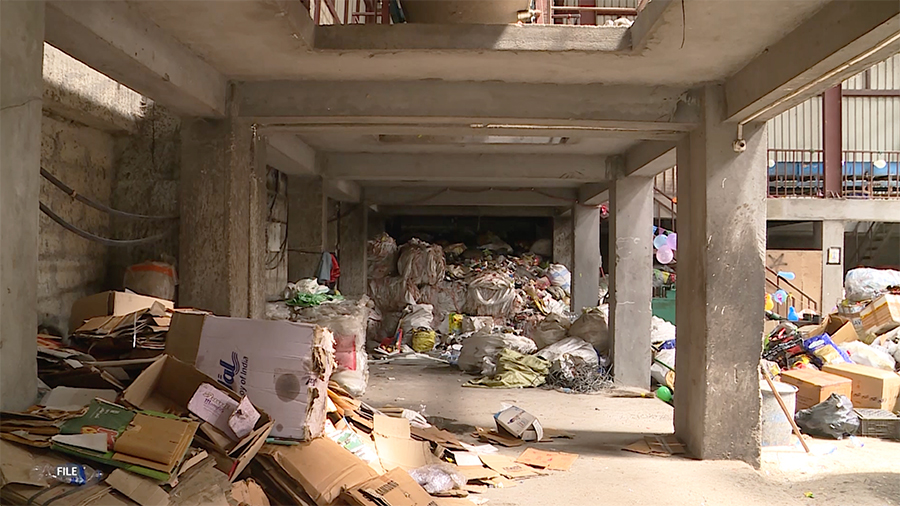 While waste bans, awareness campaigns, and recycling initiatives are in place, private sector say progress depends on creating real markets for recycled products so waste collected does not end up back in landfills or the environment.
“If there’s no market for our recycled product, what’s the point of recycling? That will really discourage entrepreneurs who are venturing into recycling. So, I think support in terms of accepting our products is something I would like to request the government to actually consider,” said Karma Yonten, the Founder of Greener Way.
According to the officials, long-term plans aim to strengthen waste segregation, expand recycling capacity, reduce plastic use, and improve drainage and wastewater systems by 2030.
However, experts warn that without stronger enforcement, public participation, and private sector innovation, plastic pollution in rivers could escalate into a long-term national burden, undermining public health, biodiversity, and Bhutan’s environmental commitments.
Namgay Dema