
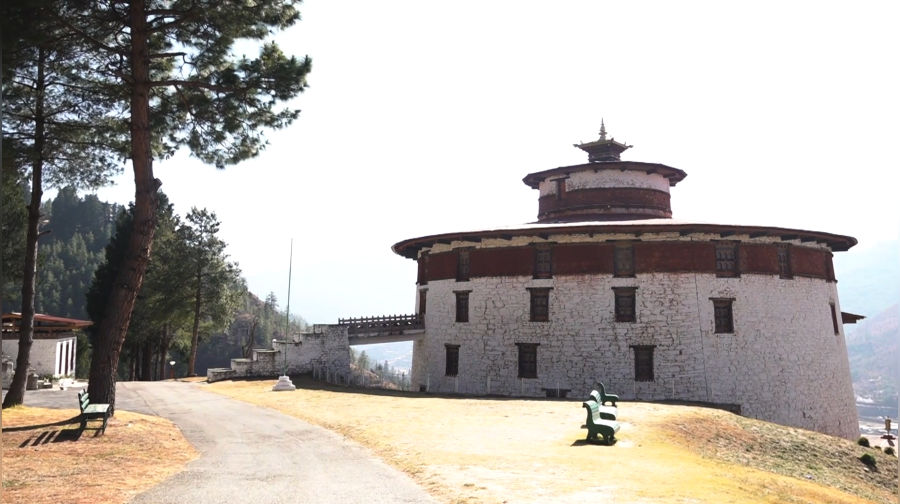
 Six years after reopening, Paro’s National Museum is recording a steady increase in both local and international visitors. The museum was closed for eight years following an earthquake and reopened in 2019 after renovation. Officials say the rise in visitors is due to updated exhibits and efforts to adapt to changing times.
The historic Ta Dzong was closed after the 2011 earthquake, with its exhibits relocated during the long renovation period. Even after reopening, visitor numbers remained modest. In the Financial Year 2022-2023, only around 2,000 Bhutanese and around 8000 international tourists visited the museum, prompting officials to rethink how heritage was presented.
The shift came through curated special exhibitions, stronger media outreach, and a move towards interactive storytelling, transforming the museum into a more engaging and contemporary cultural space.
Kamal Pokwal, the senior conservator at the National Museum said, “We realised that we could no longer rely on traditional ways of displaying artefacts. By rethinking how we present our collections and tell our stories, we have been able to attract more visitors.”
The results have been positive.
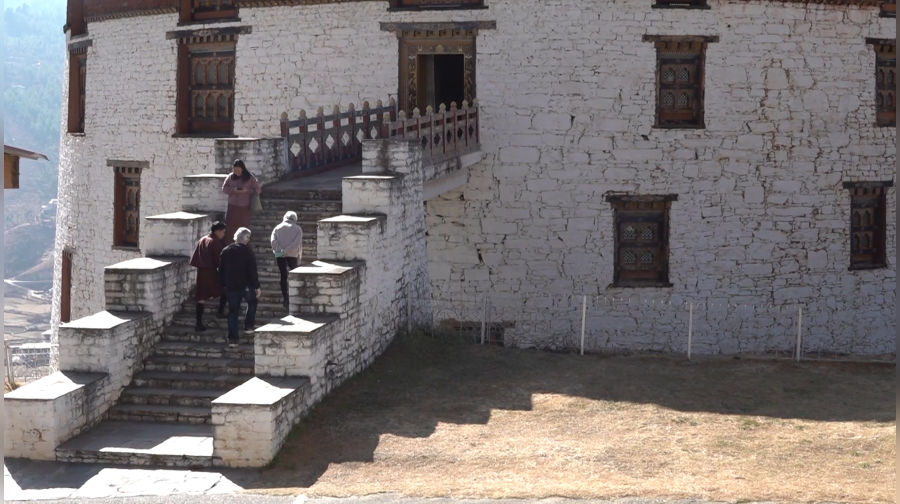 By the 2023–2024 Financial Year, local visitor numbers had risen to over 7,800, while international arrivals exceeded 44,000, generating more than 28 million ngultrum in revenue.
In the following financial year, international visitors increased further to over 57,000, with more than 8,500 Bhutanese attending the museum, bringing total revenue to over 33 million ngultrum.
Halfway through the current financial year, the museum has already welcomed over 67,000 international visitors and more than 7,000 local visitors, nearly matching last year’s total attendance of 76,278.
Entry fees are set at 100 ngultrum for Bhutanese nationals and 500 ngultrum for international visitors, with exemptions for students, researchers, and senior citizens above 65.
Visitors say the museum offers an important learning space, especially for younger generations.
“You can learn so much about our country here. I would encourage young people to visit and understand our history, and pass that knowledge on to their children,” said Dendup Tshering, a local visitor.
Sanjay, a visitor from India said, “The discipline and the way of life in the past were very different. While society has changed, the museum reminds us of what has been preserved and what we have moved away from.”
Looking ahead, museum officials believe the future of heritage conservation lies in deeper community involvement.
Kamal Pokwal said,“We are working closely with schools in Paro, and during this year’s Paro Tsechu, we plan to collaborate with students to curate an exhibition.”
The museum also plans to strengthen local tourism outreach, expand student-led exhibitions, conduct gewog-level consultations, and develop collaborative programmes with local artists, reinforcing its role as a living cultural institution rooted in the community.
Karma Samten Wangda, Paro