 The country’s fiscal deficit narrowed by nearly Nu 6bn in the Financial Year 2024-2025. According to the finance ministry’s Annual Financial Statements, the improvement was mainly due to lower overall total expenditure during this period.
The government spent less money than planned in the last financial year, helping reduce the country’s budget shortfall.
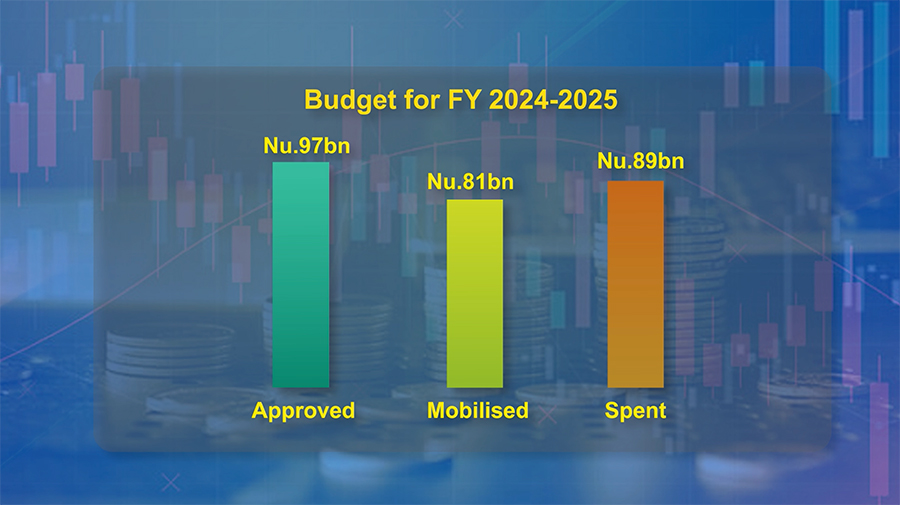
According to the finance ministry, the national budget approved for the period was Nu 97bn. However, the government actually spent about Nu 89bn while the government was able to mobilize over Nu 81bn.
The report notes that the lower-than-planned spending was primarily due to the underutilization of the capital budget. Because of this lower spending, the fiscal deficit, which is the gap between government income and spending, came down to around Nu 8bn This is much lower than the earlier estimate of nearly Nu 14bn. The deficit now stands at 2.64 per cent of the country’s economy, well below the government’s limit of five percent.
Government income also improved. Domestic revenue reached Nu 62bn, higher than expected, mainly due to better tax collection from businesses, companies, and individuals. With higher revenue, the government was able to cover its regular expenses and reduce the need to borrow money.
However, the country’s total public debt increased to nearly Nu 304bn, which is more than the size of the economy. A huge portion of debt is related to hydropower projects. The ministry says the debt is still manageable and within national limits.
Deki Lhazom and Rinchen Tsheyang Pelmo (Intern)