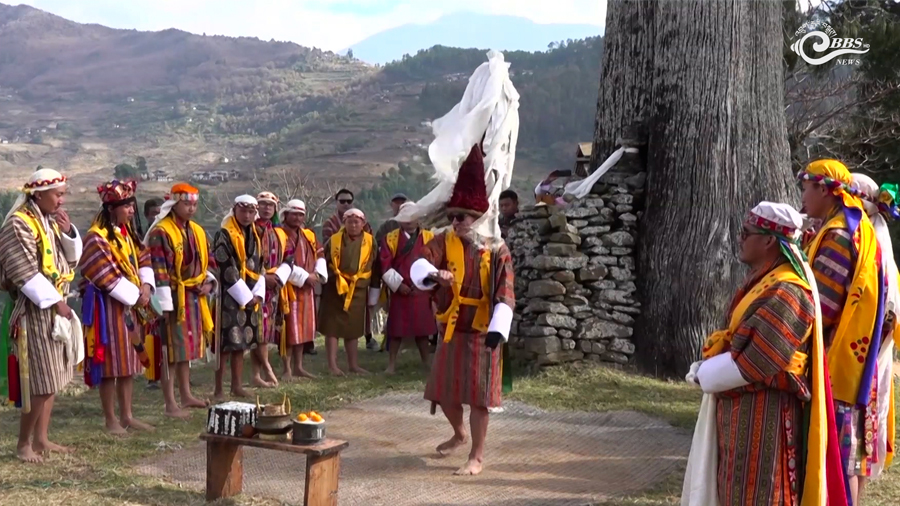
 Observed once every three years, the Sha-Gi Looju festival in Wangdue Phodrang draws residents home from across the country and abroad. But behind the celebration, many communities now struggle to find experienced shamans, known as pawos. This year, however, the ritual continued uninterrupted in Phangyuel Gewog’s Chhungsekha-Dhomkha Chiwog, as a young relative stepped forward to carry the sacred role.
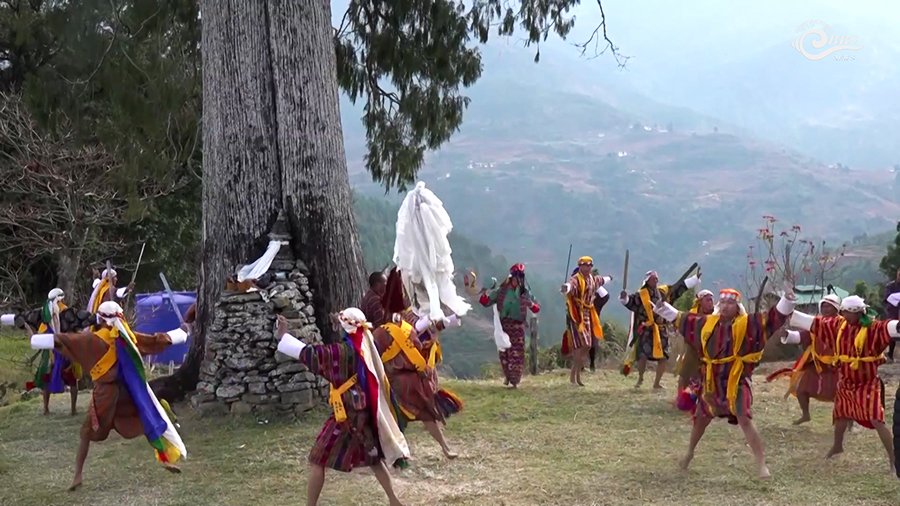 This triennial celebration is led by a pawo and a neljorm-a female shaman, who play a central role in the rituals. The pawo must chant the entire verses while performing the dance, making the role demanding and requiring experience.
22-year-old Tenzin Sangay Dorjee underwent a week of intensive training under senior performers ahead of the festival. A third-year university student studying in Paro and currently based in Thimphu, he returned home specifically to lead the celebration.
Though he performs with confidence, he keeps the rhythm by referring to the verses on his mobile phone. Dressed in a traditional gho and customary attire, he leads the group, dancing and chanting in unison.
Tenzin says he volunteered willingly and learned the steps with ease. He hopes to continue serving as pawo in the future if given the opportunity.
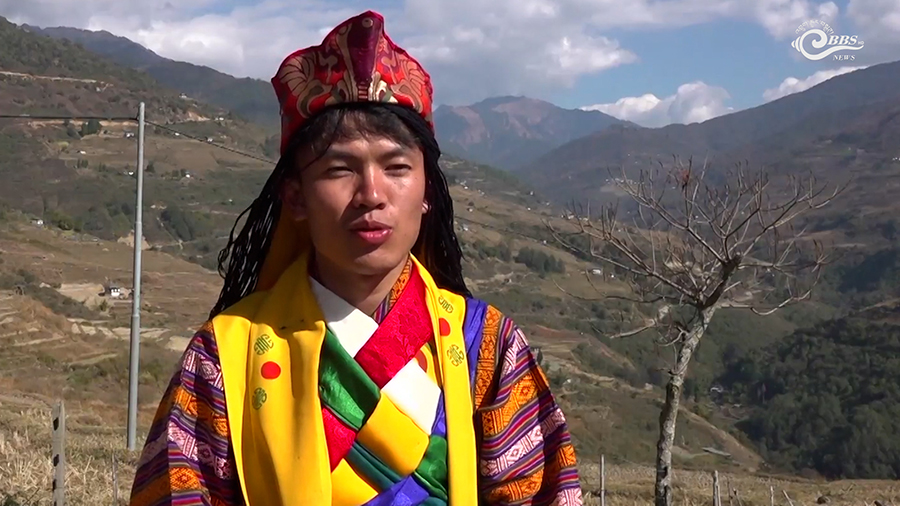
Tenzin Sangay Dorjee said, “Firstly, it is to preserve our cultural tradition. My brother also took on this role earlier, so now it is my turn. It is challenging because I have to dance and chant at the same time.”
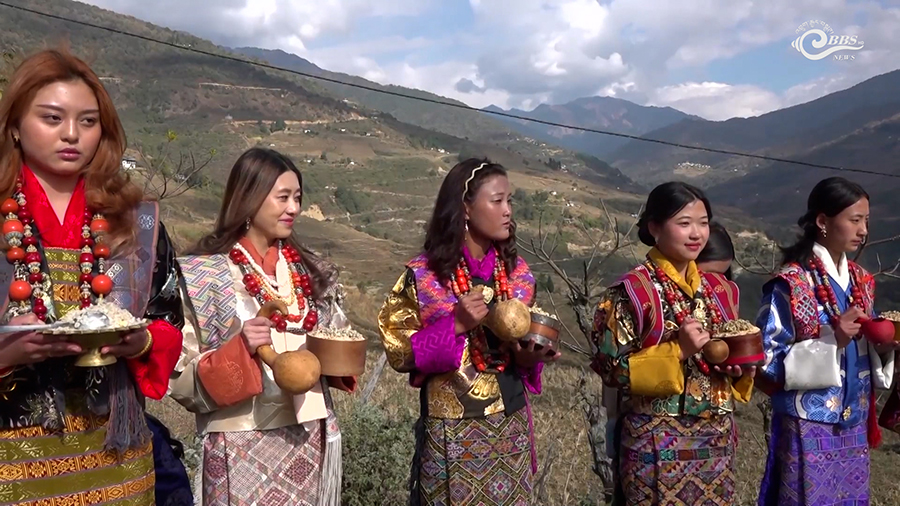 Like him, most roles of warriors known as pazaps were taken up by youth, many of whom are students. Around 20 participated in the group. Young girls, dressed in finely woven kiras and traditional ornaments, also joined the celebration, representing every household. Locals say strong youth participation helped address manpower shortages and strengthened community bonding.
Chhungsekha-Dhomkha Tshogpa Kencho Dorji said, “We often worry whether young people living and studying in towns will come forward to participate in such traditions. But seeing them here gives us hope.”
Residents say Sha-Gi Looju predates the widespread arrival of Buddhism and was introduced to subdue harmful forces during difficult times.
Wangchuk Namgay, a resident of Chhungsekha-Dhomkha said, “Sha-Gi Looju is believed to have originated before Buddhism fully flourished in Bhutan, during a time when the country faced hardships caused by evil spirits. The festival was introduced to subdue these forces, and today we perform it to pray for global peace and to protect society from harm.”
“If we do not perform this festival, people believe crop yields will decline, rains may not arrive on time, and illnesses could increase. To avoid these consequences, we perform the festival properly, believing it will ensure peace and well-being for the next three years,” said Namgay Dorji, another resident.
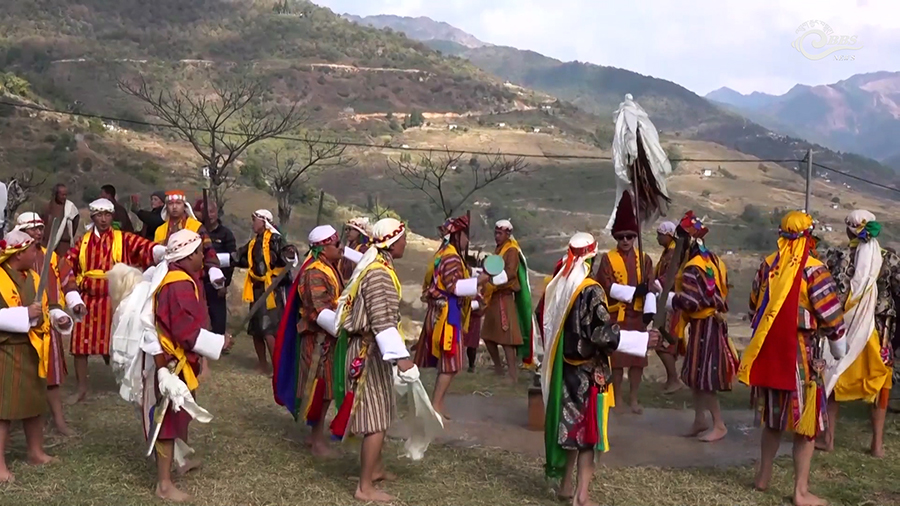 As Sha-Gi Looju is held only once every three years, continued youth participation cannot be guaranteed. Still, the community remains hopeful that the next generation will carry forward this deeply religious and culturally significant tradition.
Changa Dorji, Wangdue Phodrang
Edited by Kipchu