
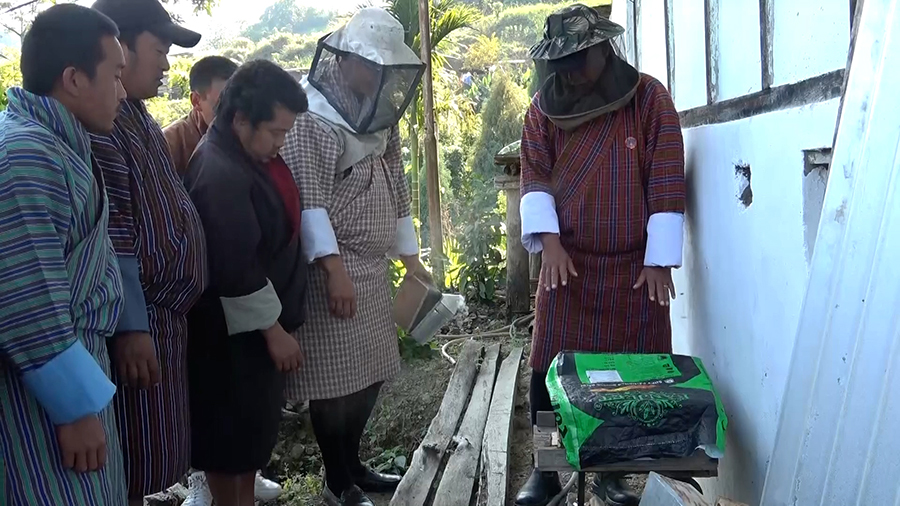
 The gentle hum of honeybees may soon become a new source of income for farmers of Mikuri Village in Dungmin, Pema Gatshel. A week-long beekeeping training was recently conducted for farmers, equipping them with practical skills to venture into beekeeping or apiculture.
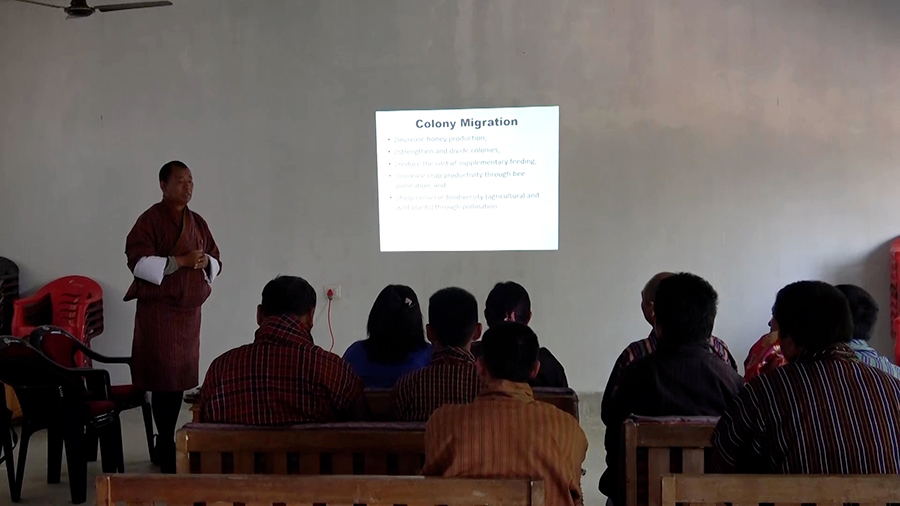 For seven days, a small group of farmers gathered with a shared purpose—to learn, adapt, and create new opportunities from nature itself. The beekeeping training opened a fresh chapter for farmers from Mikuri in Dungmin Gewog, introducing them to sustainable beekeeping practices.
“Bees play a vital role in pollination by transferring pollen between plants. This helps improve fruit yield and supports better growth of our vegetables,” said Sonam Dorji, farmer in Mikuri, Dungmin Gewog.
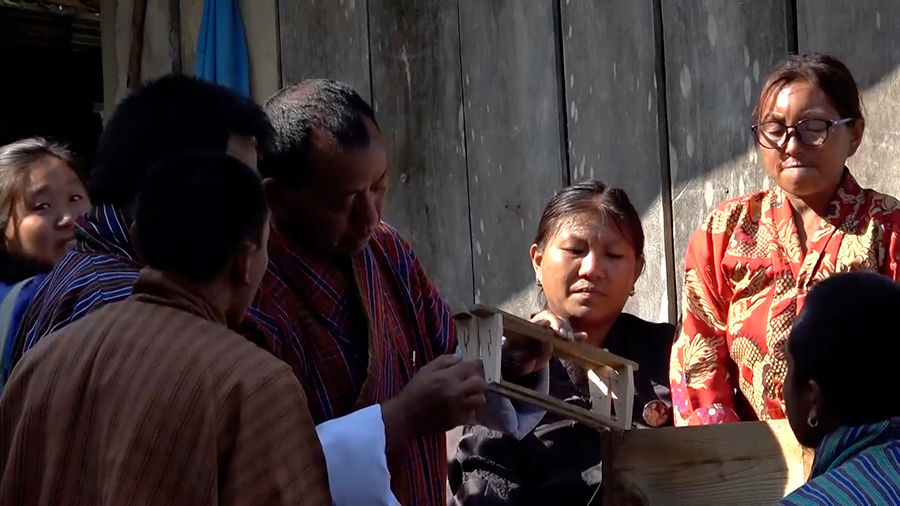 For the ten participants, the training was more than just skill development. It offered a sustainable livelihood option that works in harmony with the environment and strengthens agricultural productivity.
Karma Choden, a participant from Mikuri said, “Firstly, it benefits our natural environment. Secondly, I learned how to earn income through honey production and its management. I am very happy to have gained this knowledge.”
During the training, participants learned hive management, colony care, honey harvesting techniques, and the critical role of bees in enhancing agricultural output through pollination.
“In the traditional method, bees were kept in a single box for both breeding and honey. With the modern system, an additional box is placed on top for honey harvesting. Only the top box is harvested, ensuring hygiene and preventing contamination,” said Kabi Raj Gurung, the Senior Livestock Supervisor with the National Agriculture Programme, Jakar.
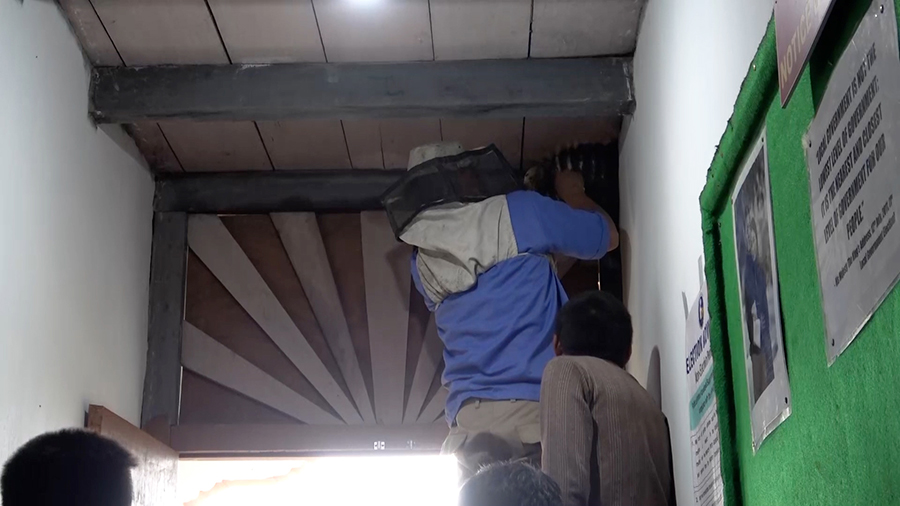 Encouraged by the new knowledge, participants say they are now confident to start beekeeping in their own villages. With favourable climatic conditions and growing demand for organic products, beekeeping is expected to boost household income while promoting sustainable farming practices.
As the training concludes, the journey is just beginning. Soon, the gentle buzz of bees will echo across Dungmin Gewog—signalling not just honey production, but resilience, sustainability, and a sweeter future for local farming communities.
Thinley Dorji, Pema Gatshel
Edited by Yeshi Gyaltshen