
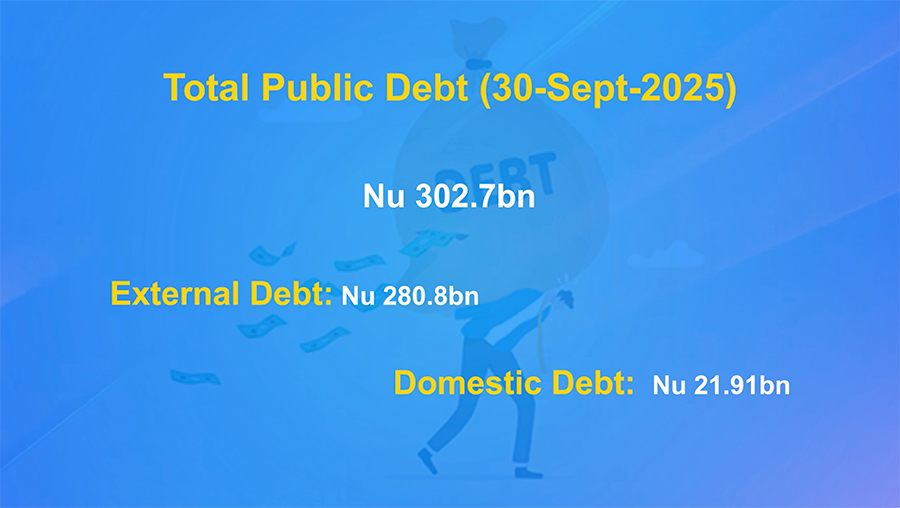
 Bhutan’s public debt stood at Nu 302.7bn as of September this year, marking a decline of more than one billion ngultrum compared to June this year. According to the Ministry of Finance’s Public Debt Situation Report, the reduction mainly resulted from a fall in domestic debt.
Of the total public debt, external debt accounts for Nu 280.8bn, while domestic debt stands at Nu 21.91bn.
Domestic debt fell by more than 11 per cent, or over Nu 2.7bn, in September. It now makes up just over 7 per cent of the total public debt and includes short-term loans from the Royal Monetary Authority and government bonds.
However, external debt rose slightly by 0.5 per cent, an increase of nearly Nu 1.5bn.
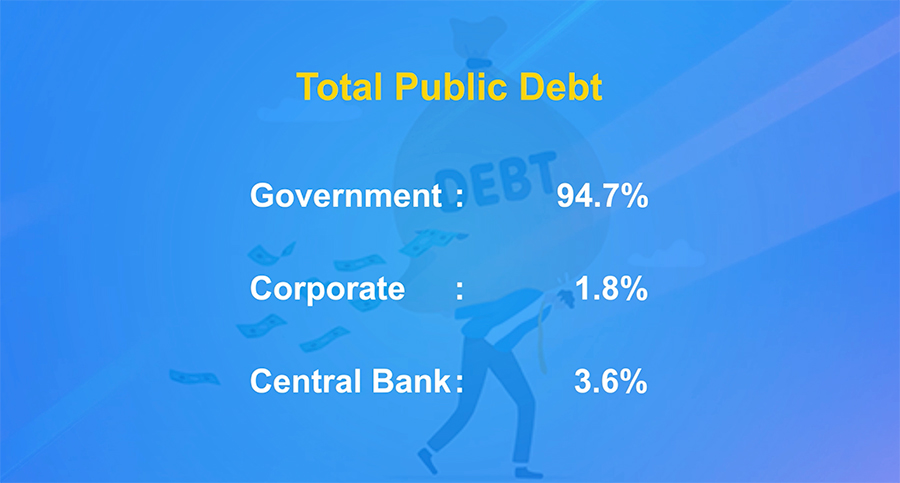 Government borrowings account for almost 95 per cent of total external debt, amounting to more than Nu 265.8bn, largely from budgetary and hydropower loans.
Corporate debt stands at about two per cent, or Nu 4.9bn, and refers to money borrowed by public corporations.
The Standby Credit Facility from India, a pre-approved loan available when needed, totals Nu 10bn.
Despite the high level of public debt, the report states that the overall risk is manageable. According to the report, most hydropower and concessional loans have long repayment periods, low or fixed interest rates, and secured revenues, which help reduce financial risks.
Kinzang Lhadon
Edited by Sangay Chezom